Tag: outsourcing

  • Calendar Management With a Virtual Assistant: The Complete System

    Calendar Management With a Virtual Assistant: The Complete System

    The Calendar Problem

    A busy professional’s calendar is a battlefield. Meeting requests come in constantly. Time zones need coordinating. Your own priorities need protecting.

    Without a system, your calendar becomes a reflection of everyone else’s priorities, not yours.

    A VA brings order to this chaos.


    What a VA Does With Your Calendar

    Protecting your time

    What to delegate:

    • Blocking your calendar for focused work (deep work, strategy time, thinking time)
    • Declining or rescheduling low-priority meetings
    • Protecting your lunch and personal time
    • Creating buffer time between meetings to avoid back-to-back scheduling
    • Blocking time for email and admin work

    Processing meeting requests

    What to delegate:

    • Reviewing all meeting requests and deciding if you should attend
    • Finding the best time across multiple stakeholders’ calendars
    • Sending invites and confirmations
    • Managing time zone differences
    • Rescheduling when conflicts arise

    Preparing you for meetings

    What to delegate:

    • Gathering agenda and relevant documents before the meeting
    • Creating pre-meeting briefing materials
    • Preparing talking points or questions
    • Setting up video conference links and testing technology
    • Sending pre-meeting context to other attendees

    Following up after meetings

    What to delegate:

    • Recording action items from your notes
    • Sending meeting summaries and action items to attendees
    • Scheduling follow-up meetings
    • Tracking action item completion
    • Scheduling the next review or check-in

    Calendar analysis and optimization

    What to delegate:

    • Identifying patterns in your calendar (too many meetings in one day, meeting overload on certain days)
    • Suggesting calendar optimizations (batch meetings on certain days, protect focus time on others)
    • Analyzing how much of your calendar is reactive vs. strategic
    • Identifying and eliminating unnecessary recurring meetings

    The System

    Calendar structure

    Create calendar categories:

    • Focus time: Blocked, non-negotiable, protected. This is your deep work time. The VA defends this fiercely.
    • Strategic meetings: Client meetings, investor meetings, key relationship meetings. These are scheduled by the VA but require your input.
    • Operations: Team meetings, check-ins, internal operations. The VA can often handle rescheduling if conflicts arise.
    • Ad-hoc/flexibility: Buffer time for urgent meetings that pop up.
    • Personal: Lunch, exercise, personal time. Blocked and protected.

    The meeting request process

    External meeting requests: The VA reviews and responds. For strategic meetings, they check with you. For operational meetings, they find time.

    Internal meeting requests: The VA consolidates. Rather than 10 separate one-on-ones with your team, they batch them into one team sync or two focused one-on-ones.

    Your own meeting needs: You tell the VA “I need to meet with Sarah and Mark.” The VA finds time, sends invites, and prepares briefing materials.

    Scheduling tools

    Use tools that make calendar sharing easy:

    • Calendar platform: Google Calendar, Outlook, or similar. The VA has access to manage on your behalf.
    • Scheduling tool: Calendly, Acuity, or similar. People can self-serve find open times (within parameters the VA sets).
    • Meeting notes: Notion, Google Docs, or Confluence for storing meeting notes and action items.

    The Impact

    Before VA:

    • Calendar is reactive and constantly shifting
    • Back-to-back meetings with no thinking time
    • You’re attending meetings you don’t need to attend
    • You’re spending 30+ minutes per day managing calendar logistics

    After VA:

      Calendar is structured and intentional

    • Focus time is protected
    • Meetings are relevant and batched efficiently
    • You have 30 minutes thinking time between meetings
    • You’re spending 5 minutes per day on calendar management

    Frequently Asked Questions

    “Won’t people resent having to go through a VA to book time with me?”

    No. Most people appreciate having clear scheduling. A scheduling link or an efficient VA is faster than trying to coordinate by email. Executives have assistants — it’s expected and respected.

    “What if the VA makes a mistake and double-books me?”

    In the first few weeks, you review calendar changes daily. After that, mistakes are rare. When they happen, the VA reschedules immediately. The system prevents mistakes more than it causes them.

    “Can the VA decline meetings on my behalf?”

    Yes, within clear guidelines. The VA knows which meetings are strategic (require your review) and which are operational (can be declined or deferred without your input). You define the rules upfront.


    The Bottom Line

    A well-managed calendar is a reflection of your priorities, not everyone else’s. A VA protects your time and ensures your calendar serves your strategic goals, not your reactive firefighting.

    This is particularly high-value for executives, founders, and professionals managing complex stakeholder relationships.

    VAConnect regularly handles calendar management as part of executive assistant roles. Many VAs specialize in this.


    Ready to take control of your calendar? Book a call with Karen to set up your calendar management system.

  • Virtual Assistant for Email Management: Reclaim 2 Hours a Day

    Virtual Assistant for Email Management: Reclaim 2 Hours a Day

    Email as a Business Problem

    Email is supposed to be a tool. For most busy professionals, it’s become the job. Studies show busy executives spend 28% of their day on email. That’s roughly 2 hours per day. For some, it’s higher.

    Email doesn’t create value. Email facilitates value creation. But it steals the time needed for actual value creation.

    This is the paradox a VA solves.


    What a VA Can Do With Your Email

    Inbox triage

    What to delegate:

    • Reading all incoming emails and flagging priority items
    • Moving routine emails to folders (newsletters, notifications, automated messages)
    • Unsubscribing from irrelevant lists
    • Creating filters and rules to automatically organize mail
    • Preparing a daily digest of emails that require your attention

    Routine email responses

    What to delegate:

    • Responding to standard emails using your approved templates
    • Forwarding and routing emails to the right people
    • Following up on open items
    • Drafting responses for you to review and approve

    Email administration

    What to delegate:

    • Managing calendar invites and marking responses
    • Organizing and archiving emails
    • Finding and retrieving archived emails
    • Managing email signatures and templates

    The Implementation

    Week 1: Your VA learns your email patterns, creates templates for standard responses, and sets up filters.

    Week 2+: The VA handles triage. You see only flagged emails. Routine items are handled with your templates.

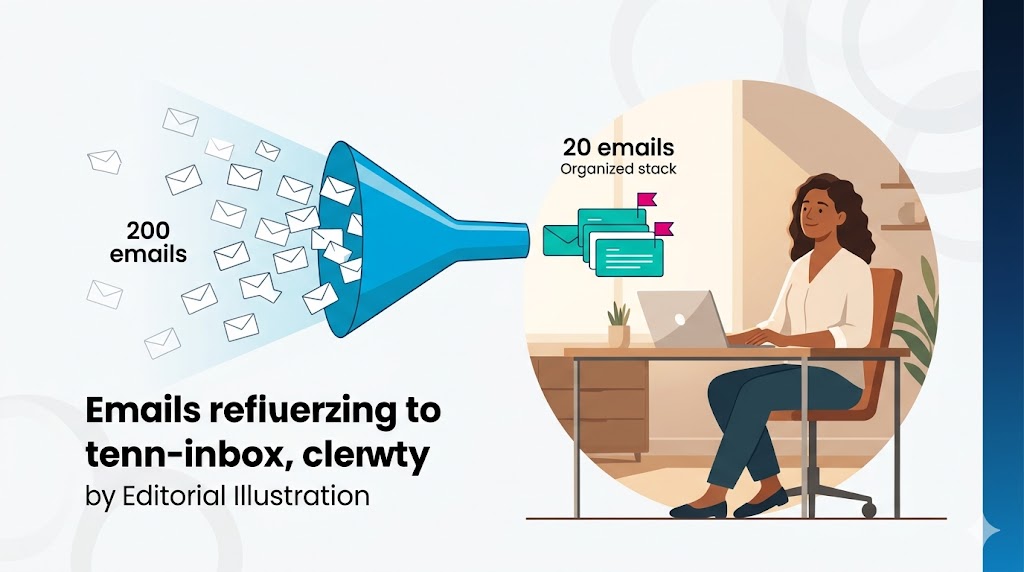
    Result: Your inbox goes from 200+ emails/day that you’re reading to maybe 20–30 truly important emails that require your attention.


    The Time Recovery

    If you’re spending 2 hours/day on email and a VA can reduce that to 30 minutes/day:

    Time recovered: 1.5 hours/day × 250 working days = 375 hours/year

    At even a modest £100/hour opportunity cost, that’s £37,500/year in recovered time.

    A VA costs £34,200/year. The payback is immediate.


    The Common Concern

    “Won’t I miss important emails?”

    No, if the VA is trained properly. The VA’s job is to flag everything that requires your attention. They’re conservative: better to show you an email you don’t need than hide one you do. After 2–3 weeks, you’ll have defined what “important” means and the VA will have near-perfect accuracy.


    The Bottom Line

    Email is the biggest time thief in most businesses. A VA doesn’t eliminate email—they eliminate your need to process every email personally.

    VAConnect regularly places VAs in email management roles. It’s one of the highest-ROI VA applications.


    Ready to reclaim 2 hours per day? Book a call with Karen to design your email management system.

  • Virtual Assistant for Recruiters: Talent Acquisition Support That Actually Works

    Virtual Assistant for Recruiters: Talent Acquisition Support That Actually Works

    The Recruiter’s Time Problem

    Recruiting is a volume game. A recruiter working on commission closes placements by managing pipelines: sourcing candidates, screening, coordinating interviews, negotiating offers, managing logistics.

    But alongside the core recruiting work sits a mountain of admin:

    • Email management and candidate correspondence
    • Interview scheduling and coordination
    • Background check and reference administration
    • Offer letter generation and negotiation coordination
    • CRM data entry and pipeline management
    • Reporting and metrics
    • Compliance documentation

    This admin doesn’t close placements. But placements don’t happen without it.

    A VA removes the administrative friction, freeing recruiters to focus on actual recruiting work.


    What a Recruiter VA Handles

    Candidate communication and screening

    What to delegate:

    • Initial screening calls (preliminary candidate qualification)
    • Sending screening question questionnaires and collecting responses
    • Collecting candidate information (resume parsing, LinkedIn details)
    • Sending interview invitations and scheduling confirmations
    • Candidate follow-up on application status
    • Rejection emails (warm, professional rejections)
    • Offer acceptance coordination

    Interview and logistics coordination

    What to delegate:

    • Scheduling interviews across multiple stakeholders
    • Sending interview confirmations to candidates and hiring team
    • Preparing interview briefing materials
    • Coordinating phone/video interview logistics
    • Collecting feedback from interviewers
    • Rescheduling cancelled interviews
    • Coordinating final round logistics (travel, accommodations if in-person)

    Background and reference checking

    What to delegate:

    • Coordinating with background check providers
    • Collecting reference contact information from candidates
    • Conducting reference calls (basic questions, taking notes)
    • Following up on background checks
    • Organizing results for the hiring team

    Offer and onboarding administration

    What to delegate:

    • Generating and sending offer letters
    • Coordinating offer negotiation (logistics, not terms)
    • Collecting signed offer acceptance
    • Preparing onboarding materials for accepted candidates
    • Coordinating start date and first-day logistics

    Pipeline and CRM management

    What to delegate:

    • Data entry into recruiting CRM
    • Maintaining candidate records with notes and status
    • Pipeline reporting and metrics
    • Flagging candidates for follow-up
    • Maintaining prospect lists and source tracking

    Compliance and documentation

    What to delegate:

    • Maintaining required recruiting documentation
    • Tracking anti-discrimination compliance (Equal Opportunity documentation)
    • Organizing job ads and posting tracking
    • Retention of hiring records as required

    The Recruiter VA: Impact and Economics

    A typical recruiter manages 10–15 active searches at a time. Each search involves 50–100 candidate touchpoints across sourcing, screening, interviewing, and closing.

    Without VA: Recruiter does all the admin + recruiting. They’re limited to 10–15 concurrent searches. Placements take longer. Follow-up is inconsistent. Admin is sloppy.

    With VA: Recruiter focuses on relationships, candidate assessment, and closing. VA handles all admin. Recruiter can manage 20–25 concurrent searches. Placements happen faster. Admin is systematic.

    At a 5% commission on placements (typical for staffing), going from 10 placements/month to 15 placements/month = significant revenue increase for minimal cost.


    The Right VA For Recruiting

    A good recruiting VA:

    • Understands candidate communication and professionalism
    • Is naturally organized and detail-oriented
    • Can manage multiple stakeholder schedules
    • Understands recruiting processes and terminology
    • Has strong customer service instincts (candidates are customers)

    Prior recruiting experience is helpful but not essential. The VA can learn recruiting quickly if they have the baseline skills.


    Frequently Asked Questions

    Can a VA screen candidates independently?

    Yes, with criteria you define. A VA can do preliminary screening (confirming basic qualifications) and knock out non-qualifiers. Final assessment stays with you.

    What about candidate experience when they’re talking to a VA?

    Most candidates expect recruiter support staff. If the VA is professional and responsive, candidates appreciate it. For sensitive conversations (offer negotiation, salary discussion), the recruiter takes the call directly.

    How does this work across multiple recruiters?

    A VA can support multiple recruiters if the work is organized by recruiter. Typically: one VA per 2–3 recruiters, depending on search volume.


    The Bottom Line

    Recruiting is a relationship and pipeline business. The recruiter wins by managing more relationships and pipelines. A VA removes the administrative friction that prevents that. Simple economics: if a VA frees time to complete one additional placement per month, they pay for themselves.

    VAConnect places VAs with recruiting firms regularly. Many have recruiting or staffing background and understand the specific demands of the space.


    Ready to free your recruiters from admin and close more placements? Book a call with Karen to discuss the right VA structure for your team.

  • How Funded Startups Use Virtual Assistants to Move Faster

    How Funded Startups Use Virtual Assistants to Move Faster

    The Operational Scaling Problem

    Here’s the startup scaling problem nobody talks about openly: the moment you raise money, you have a new constraint. It’s not product development or sales. It’s operations.

    Pre-funding, you’re lean. You and your co-founders do everything. Decisions are fast. Communication is direct. You move.

    Post-funding, you have resources but also complexity. You have investors who need updates. You have employees who need managing. You have vendor relationships, compliance requirements, HR processes, and financial reporting. You have board meetings, quarterly reviews, and investor updates.

    The product team wants to focus on product. The sales team wants to focus on sales. But someone has to manage the operational layer. That’s often the CEO, which means the CEO stops doing the work that actually builds the company.

    A VA solves this without requiring a full-time operations hire.


    The Specific Operational Needs of Funded Startups

    Executive admin and calendar management

    A CEO of a funded startup is in 15–20 meetings per week: board meetings, investor meetings, team meetings, customer meetings, advisor meetings. Managing a calendar that complex requires a dedicated person.

    What a VA handles:

    • Calendar optimization (blocking focus time, coordinating across time zones)
    • Meeting logistics (invites, reminders, rescheduling)
    • Preparing briefing materials before meetings
    • Preparing meeting summaries and action items after meetings
    • Managing email triage (CEO only sees priority items)

    Investor and board relations administration

    Investor relations is strategic, but investor administration is not.

    What a VA handles:

    • Investor update coordination (gathering information from team, compiling)
    • Board meeting scheduling and logistics
    • Board packet preparation and distribution
    • Action item tracking across board meetings
    • Cap table and shareholder record management (basic)

    Team operations and HR administration

    A growing team generates administrative overhead: onboarding, scheduling, benefits, feedback collection.

    What a VA handles:

    • New hire onboarding (sending documents, scheduling, introductions)
    • Team calendar coordination (planning meetings, offsite scheduling)
    • Meeting scheduling for all-hands, team standups, review cycles
    • Collecting 1-on-1 feedback and organizing feedback for reviews
    • Expense tracking and reimbursement processing
    • Travel coordination for team and visitors

    Vendor and contractor management

    Funded startups work with dozens of vendors: cloud providers, legal, accounting, marketing agencies, advisors, etc.

    What a VA handles:

    • Vendor contract tracking and renewal dates
    • License and subscription management
    • Invoice processing and payment coordination
    • Service escalation (when something isn’t working)
    • Vendor relationship maintenance

    Financial administration

    A funded startup has financial complexity: accounting, payroll, tax compliance, equity management, cash flow tracking.

    What a VA handles:

    • Invoice processing and payment coordination
    • Expense tracking and receipt management
    • Payroll administration (with accounting firm)
    • Cash flow tracking and reconciliation (basic)
    • Cap table and equity tracking (basic, with legal counsel)
    • Tax document preparation and filing coordination

    Communication and documentation

    A growing company needs internal communication infrastructure.

    What a VA handles:

    • Internal communication management (email, Slack, documentation)
    • Meeting notes and decision tracking
    • Action item management
    • Newsletter production (internal and external)
    • Company document repository (onboarding docs, policies, processes)

    The VA Structure for Different Company Stages

    Seed stage (£1M–£5M raised)

    Structure: One full-time VA supporting the CEO

    Focus: Calendar/exec admin, basic finance/admin, team logistics

    Cost: £2,850/month

    Series A (£5M–£15M raised)

    Structure: One VA supporting the CEO + one part-time VA supporting operations/finance

    Cost: £4,000–£5,000/month

    Series B+ (£15M+ raised)

    Structure: VA for CEO, operations coordinator, finance/admin coordinator

    Cost: Transitioning to full-time operations team; VAs typically become part of that structure


    Why VAs Work for Funded Startups

    They’re fast to hire. A full-time ops person takes 2–3 months to hire. A VA can start in 2 weeks.

    They’re flexible. As the company grows, VA hours can increase or decrease. You’re not locked into a full salary.

    They reduce CEO burnout. A burnt-out CEO is expensive. A VA handling calendar, email, and administrative overhead keeps the CEO functioning.

    A full-time ops coordinator costs £35,000–£50,000/year salary + benefits. A VA costs £34,200/year for full-time equivalent service.

    They compress onboarding time. A new team member doesn’t have to manage their own logistical onboarding. It’s handled professionally.


    Common Mistakes Funded Startups Make

    Hiring too late. Many funded startups suffer through 6 months of founder admin chaos before hiring a VA. The earlier, the better.

    Assigning the work to a junior team member. A junior engineer or product person doesn’t want to manage the CEO’s calendar. It’s career-limiting for them and inefficient for the company.

    Unclear responsibilities. If it’s unclear what the VA is responsible for, nothing gets done. Be explicit in the brief.

    No escalation protocol. If the VA can’t tell the difference between urgent and routine, things slip through the cracks. Define escalation explicitly.


    The Business Case

    For a funded startup with a CEO earning £150,000/year (loaded cost £250,000/year = £120/hour):

    CEO time cost of administrative work: 10 hours/week admin × £120 = £1,200/week = £62,400/year

    VA cost: £2,850/month = £34,200/year

    Value of freed time: Even at 50% efficiency (VA handles 50% of admin and CEO does the remaining 50%), that’s 5 hours/week freed = £600/week = £31,200/year in opportunity cost

    Net value: £31,200 – £34,200 = break-even in direct terms. But the real value is:

    • CEO can focus on fundraising, strategy, and key relationships
    • Team experience is better (professional onboarding, responsive leadership)
    • Investor experience is better (professional communication, organized board materials)
    • CEO doesn’t burn out (worth far more than any financial calculation)

    Frequently Asked Questions

    Should a VA report to the CEO or to operations?

    If it’s the CEO’s executive assistant, they report to the CEO. If it’s supporting operations, it can report to the Head of Ops (once you have one) or to the CEO. Either way, make reporting lines clear.

    Can a single VA support multiple executives?

    Yes, but it gets complicated. A VA can support 2–3 executives if their calendars don’t overlap too much. Beyond that, you need multiple VAs.

    What happens to the VA when the company hires an ops person?

    Many companies keep the VA on as an operations assistant or executive assistant. Some fold the VA’s duties into the ops role. It depends on company needs.


    The Bottom Line

    Funded startups that move fast have operational infrastructure that enables speed.

    The best time to hire is 2–4 weeks after raising money, when complexity hits and the CEO realizes they’re drowning in calendar and email.

    VAConnect works with funded startups regularly. Many of their startup placements are part of the early team infrastructure.


    Looking to add operational infrastructure without hiring an ops team yet? Book a call with Karen to discuss the right VA structure for your stage.

  • Virtual Assistant for Accountants: Bookkeeping Tasks to Outsource

    Virtual Assistant for Accountants: Bookkeeping Tasks to Outsource

    The Accountant’s Time Problem in Numbers

    A typical sole-practice or small accountancy firm with 100–200 clients looks like this:

    Activity % of week Requires qualification?
    Technical accounting and tax advice 20% Yes
    Preparing accounts and tax returns 30% Partially (judgment)
    Client relationship management 15% No
    Document chasing and admin 15% No
    Email and correspondence management 10% No
    Business development 5% No
    Practice operations 5% No

    The last four categories — 35% of the week — are largely delegatable without any professional expertise. For a practice where qualified accountant time is worth £150/hour, that’s 14 hours per week × £150 = £2,100/week in time value sitting in work that could be done for £25–£35/hour.


    The 9 Highest-Value Delegations for Accounting Practices

    1. Client Onboarding and Engagement

    Getting a new client from enquiry to active engagement involves a predictable sequence of administrative steps. Every step can be owned by a VA.

    What to delegate:
    – Sending engagement letters and terms of business
    – Issuing and tracking professional clearance requests
    – Requesting AML/KYC documentation and chasing outstanding items
    – Setting up new client records in your practice management system (Digita, IRIS, CCH, TaxCalc)
    – Coordinating with previous accountants for file transfer
    – Maintaining the new client pipeline tracker

    Brief requirement: Your onboarding SOP, your document checklist, practice management system access with appropriate permissions.

    2. Document Collection and Chasing

    This is the single biggest time drain in most practices. Clients are notoriously slow to provide information — bank statements, receipts, payroll records, VAT returns — and chasing them requires consistent, professional follow-through.

    What to delegate:
    – Sending initial document requests from your template
    – Following up on outstanding documents at defined intervals (day 7, day 14, day 21)
    – Escalating to you when a client is consistently non-responsive
    – Maintaining a document receipt tracker per client
    – Acknowledging and logging received documents

    The discipline this creates: When a VA owns document chasing, it happens consistently rather than when the accountant gets around to it. Deadlines are less likely to be missed because the information gap was filled two weeks earlier.

    3. Bookkeeping and Data Entry

    For practices that offer bookkeeping as a service, or that prepare accounts from client-provided records, data entry is high-volume, process-driven work.

    What to delegate:
    – Transaction data entry from bank statements, invoices, and receipts
    – Bank reconciliation in accounting software (Xero, QuickBooks, FreeAgent, Sage)
    – Reconciling supplier invoices against purchase orders and delivery notes
    – Processing payroll inputs (under accountant review and sign-off)
    – VAT return data preparation (under accountant review)
    – Entering client-provided data into accounts preparation software

    What stays with the accountant:
    – Review and sign-off on all prepared accounts
    – Judgment on accounting treatment for complex or unusual transactions
    – Client-facing advice conversations
    – All regulatory submissions and their content

    4. Management Accounts Production Support

    For practices producing monthly or quarterly management accounts for clients, the data gathering, formatting, and preliminary calculations can be substantially handled by a VA.

    What to delegate:
    – Pulling financial data from the client’s accounting system
    – Populating management accounts templates with the period’s figures
    – Preparing variance analysis tables (actual vs. budget, year-on-year)
    – Formatting and branding the management accounts pack for client presentation
    – Distributing the completed pack to the client

    What stays with the accountant:
    – Reviewing and interpreting the numbers
    – Identifying and explaining significant variances
    – Advising on financial performance and strategy

    5. Tax Return Preparation Support

    Similar to management accounts — the mechanical work of populating a tax return from source data is delegatable; the judgment about tax treatment is not.

    What to delegate:
    – Inputting client data from engagement letters, P60s, bank statements, rental records
    – Preliminary preparation of personal tax returns in TaxCalc/IRIS/Digita from client-provided data
    – Chasing missing information required to complete the return
    – Preparing the covering letter for client review
    – Logging completion status in your workflow tracker

    What stays with the accountant:
    – Reviewing all computations for accuracy and appropriate treatment
    – Identifying tax planning opportunities
    – Signing off and submitting all returns
    – Advising the client on the outcome

    6. Accounts Preparation Administration

    Getting a set of accounts from draft to filing involves a series of administrative steps that consume accountant time without requiring technical expertise.

    What to delegate:
    – Preparing and sending draft accounts to clients for review
    – Tracking client approval and chasing outstanding sign-offs
    – Preparing Companies House filing packs
    – Coordinating with the client on filing deadlines
    – Filing reminders and deadline tracking across the client portfolio
    – Preparing the annual accounts letter for client signature

    7. Client Communication and Relationship Management

    What to delegate:
    – Acknowledging all client correspondence within your SLA
    – Responding to standard queries (deadline dates, payment references, portal access)
    – Sending statutory filing reminders (SA107, corporation tax, VAT returns, confirmation statements)
    – Distributing periodic communications (budget summaries, regulatory update briefings, tax year-end guidance)
    – Scheduling and confirming meetings
    – Following up on client feedback requests

    Escalation triggers: Any communication that involves technical accounting or tax advice, client complaints, or fee disputes goes directly to the accountant.

    8. Payroll Support

    For practices running payroll for clients, the administrative layer is substantial.

    What to delegate:
    – Collecting payroll data from clients (hours, salaries, expenses, new starters, leavers)
    – Entering payroll data into payroll software under accountant review
    – Distributing payslips and PAYE summaries to clients
    – Processing auto-enrolment administration (pension enrolment letters, opt-out processing)
    – Preparing P11D data collection requests
    – Maintaining the payroll client tracker with run dates and status

    9. Practice Operations

    What to delegate:
    – Invoice generation and fee statement distribution
    – Payment receipt tracking and aged debtors management
    – Supplier invoice processing and expense management
    – Practice management software maintenance (client database, workflow tracker)
    – Marketing and content support (newsletter, social media, website updates)
    – Professional development administration (CPD tracking, membership renewals)


    The Integration Challenge: Making It Work in Practice

    The biggest practical challenge for accounting practices is integrating a VA with practice management software and accounting systems. Here’s how to do it securely.

    Practice management system access:
    Most systems (IRIS, CCH, Digita, TaxCalc) support multi-user access with role-based permissions. Create a named VA user account with access to the functions they need — client records, workflow management, document management — without full administrative access.

    Cloud accounting platforms:
    Xero, QuickBooks, and FreeAgent all support external collaborator access. The VA gets client-level access through your accountant portal — they can enter and review data without seeing your firm’s own accounts or other clients’ data.

    Document management:
    A shared document management system (SmartVault, Suralink, or Google Drive with appropriate structure) allows the VA to organise and distribute client documents without accessing your email or personal systems.

    GDPR compliance:
    Client financial data is personal data under UK GDPR. Your VA services agreement needs appropriate data processing clauses. Document the lawful basis for the VA processing client data. Working with a managed agency like VAConnect provides the data processing agreement framework as part of the engagement.


    The Staffing Model: VA vs. Junior Accountant

    For many smaller practices, the decision is between hiring a junior accountant/bookkeeper as a staff member or engaging a VA.

    Junior accountant/bookkeeper (employed):
    – Salary: £22,000–£30,000/year
    – Fully loaded (NI, pension, equipment, office): £28,000–£38,000/year
    – Can handle technical work up to their qualification level
    – Ongoing training and CPD investment required
    – Full employment relationship and obligations

    VAConnect Full-Day VA:
    – Cost: see the pricing page
    – No employer obligations
    – Month-to-month flexibility
    – Ongoing training through VAVarsity (included)
    – 30-day replacement guarantee

    For purely administrative support (no technical accounting work), the VA model is frequently more cost-effective and more flexible. For practices that need both technical accounting support and administrative support, a combination — junior accountant for technical work, VA for administration — typically works well.


    Building Your Accounting Practice VA Brief

    Practice profile:
    – Software stack (practice management, accounting platforms, payroll software)
    – Client types (personal tax, corporate, SME, high-net-worth)
    – Filing frequency calendar (when the peak workloads occur)
    – Your review and approval workflow

    Document protocols:
    – Document naming conventions
    – File structure within your DMS
    – What documents require what treatment

    Communication standards:
    – Professional tone appropriate to your practice’s client relationships
    – Escalation criteria (anything technical, any complaint, any fee discussion)
    – Response time commitments

    Workflow standards:
    – Your workflow management system and how the VA uses it
    – Job status updates and completion tracking
    – Deadline monitoring protocol


    The Time Recovery Calculation

    Here’s what a typical accounting practice achieves with a well-deployed full-day VA.

    For a two-partner practice (combined 80 hours/week of partner time, billing at average £180/hour):

    • Pre-VA: 35% of time on admin = 28 hrs/week × £180 = £5,040/week in cost
    • Post-VA: VA handles 80% of admin = partner time on admin drops to 5.6 hrs/week = £1,008/week
    • Weekly recovery: £4,032
    • Annual recovery: £209,664
    • VA cost: £34,200/year
    • Net recovery (after VA cost): £175,464/year

    That’s an 8:1 return on investment — before accounting for the additional client capacity the recovered time creates.


    Frequently Asked Questions

    Can a VA submit to HMRC or Companies House on our behalf?

    Your VA can prepare filings for your review and sign-off. Submission authority (agent credentials, Government Gateway login) should remain with a qualified and authorised individual in the practice. The VA prepares and submits under your credentials with your explicit approval — they do not hold independent submission authority.

    What about client confidentiality? Can I share client financial data with a VA?

    Yes, with appropriate data processing provisions in place. Client financial data is personal data under GDPR. Your engagement with a managed VA agency should include a Data Processing Agreement (DPA) that covers this. The VA works with client data in firm-managed systems — not personal accounts — and is bound by the confidentiality provisions in the agency agreement.

    My clients have complex tax affairs. Can a VA really help?

    The VA handles the administrative and data entry layer — not the technical judgment. For a client with complex tax affairs, the VA might gather all the source documents, enter the data into your returns software, prepare the draft computation, and chase any missing information. You review the computation and apply your judgment. The VA doesn’t make the technical decisions; they make sure you have everything you need to make them efficiently.

    I’m a sole practitioner. Is a full-day VA too much?

    A half-day VA (80 hours/month) is often the right starting point for sole practitioners. It covers the core administrative overhead without overcommitting. As your client base grows and the administrative load increases, you can upgrade. VAConnect’s Starter package (40 hours/month) is also available for lower-volume practices.


    The Bottom Line

    Accounting practices lose margin in two ways: through unrecovered time and through qualified staff spending time on work that doesn’t require their qualification. A VA addresses both.

    The administrative work that fills 35–50% of an accountant’s week — document chasing, data entry, client communication, onboarding administration, report preparation — doesn’t require an accounting qualification. It requires competence, reliability, and familiarity with your systems. A well-matched, properly briefed VA provides exactly that.

    VAConnect has placed VAs with accounting practices in the UK, South Africa, Australia, and internationally. The matching process accounts for your software stack, your workflow, and the specific administrative requirements of your practice type.


    Ready to reclaim 15 hours a week? Book a strategy call with Karen — she’ll help you identify the highest-value delegations for your practice.

  • Virtual Assistant for Lawyers: Legal Admin Tasks You Can Outsource Today

    Virtual Assistant for Lawyers: Legal Admin Tasks You Can Outsource Today

    The Legal Services Time Problem

    A typical law firm or solo practice has two critical constraints: billable hours and administrative burden.

    Billable work — client matters, case work, legal research, client calls — is what generates revenue and builds the firm’s reputation. But it’s constantly crowded out by non-billable admin:

    • Email and client correspondence management
    • Calendar and meeting scheduling
    • Document management and file organization
    • Time tracking and billing
    • Client intake and onboarding
    • Appointment reminders and follow-up
    • Invoice generation and payment tracking
    • CRM maintenance
    • Marketing and business development administration

    For a solo practitioner or small firm, this administrative work often consumes 25–40% of the working day. That’s time not spent on billable work or business development.

    This is where a virtual assistant creates immediate, measurable ROI.


    What a Legal VA Can Handle

    1. Client Communication and Intake

    What to delegate:

    • Acknowledging all inbound client inquiries (phone, email, form submissions) within 4 hours
    • Sending initial information packets and intake questionnaires
    • Scheduling initial consultations in your calendar
    • Preparing client intake summaries for your review before the consultation
    • Following up on outstanding intake information (chasing documents, responses)
    • Maintaining client records in your practice management system
    • Handling routine client correspondence that doesn’t require your direct involvement

    The impact: Fast, professional acknowledgement of new inquiries increases conversion from inquiry to retained client. A prospect who gets an immediate response and professional handling is more likely to hire you than one who waits 24+ hours.

    2. Calendar and Meeting Management

    What to delegate:

    • Managing your calendar and blocking out time for billable work
    • Scheduling client meetings, court appearances, and internal deadlines
    • Sending meeting reminders and confirmations
    • Coordinating calendars with opposing counsel or external parties
    • Managing waiting lists and rescheduling cancellations
    • Tracking key deadlines across cases and managing deadline alerts

    Why it matters: Missed deadlines are the number-one cause of malpractice claims in law firms. A VA managing deadlines and reminders is professional insurance.

    3. Document Management and Organization

    What to delegate:

    • File organization and naming convention compliance
    • Document scanning and digitization
    • Maintaining document version control
    • Organizing case materials by matter and phase
    • Tracking document delivery and filing deadlines
    • Preparing document bundles and exhibits for court or client review
    • Legal document assembly (from templates you provide)

    The efficiency gain: Disorganized document management wastes attorney time. A systematically organized file system means you spend minutes finding what you need instead of hours.

    4. Time Tracking and Billing

    What to delegate:

    • Entering time entries from your notes into your practice management system
    • Invoice generation and sending
    • Payment tracking and follow-up on outstanding fees
    • Billing queries and invoice adjustments (under your direction)
    • Monthly reconciliation and reporting
    • Trust account management and reconciliation support

    Why it matters: Time tracking and billing are critical to firm profitability but often neglected because they’re boring. A VA managing this ensures you’re billing all your work and getting paid on time. This alone pays for the VA’s cost multiple times over.

    5. Case and Matter Administration

    What to delegate:

    • Maintaining a case management system with key dates, deadlines, and statuses
    • Preparing case summaries and matter overviews
    • Managing procedural checklists and task lists for case types
    • Tracking discovery timelines and compliance
    • Assembling hearing or trial materials and exhibits
    • Managing opposing counsel correspondence and tracking responses

    6. Business Development Administration

    What to delegate:

    • Maintaining a referral source database and relationship tracking
    • Sending regular updates to past clients and referral sources
    • Managing speaking engagement and event logistics
    • Content distribution and marketing follow-up
    • Email outreach campaigns to targeted prospects

    The Legal VA Brief: What Your VA Needs to Understand

    A VA working in a legal context needs to understand:

    Confidentiality and ethics: All client information is privileged and confidential. The VA signs a confidentiality agreement and understands they cannot discuss any case details outside the firm. They’re bound by your ethical obligations even if they’re not a lawyer.

    Deadline management: Legal deadlines are not suggestions. They’re hard stops. A missed filing deadline is malpractice. Your VA brief needs to emphasize this.

    Attorney-client privilege: Communications between you and your clients are privileged. The VA understands which communications they can handle and which absolutely require your direct involvement.

    Compliance and rules of professional conduct: The VA doesn’t give legal advice. They don’t draft legal documents beyond what’s in templates you’ve approved. They understand the boundary between legal work (which requires your qualification) and administrative support.

    Your practice management system: Whatever system you use (Clio, LawLingo, MyCase, Rocket Matter), your VA needs to be fluent in it and maintain data standards rigorously.


    What Changes When You Bring on a Legal VA

    Before VA:

    • Admin work: 25–40% of your day
    • Billable hours: limited by time spent on admin
    • Client response time: reactive (you respond when you find time)
    • Deadline management: you carry the mental overhead
    • Billing: incomplete or delayed (you forget to bill some work)

    After VA:

    • Admin work: 2–4% of your day (review and exceptions only)
    • Billable hours: increased from freed-up time (4–6 extra billable hours per week)
    • Client response time: fast and professional (handled by VA within 4 hours)
    • Deadline management: systematic and tracked (nothing slips through)
    • Billing: complete and on time (all work billed, invoices sent promptly)

    The Economics for Legal Practices

    Scenario: Solo practice attorney

    Billable rate: £300/hour

    Hours spent on admin: 12 hours/week

    Cost to practice (opportunity cost): 12 hours × £300 = £3,600/week = £187,200/year

    VA cost: £1,700/month = £20,400/year

    Time recovered (conservatively 70%): 8.4 hours/week × £300 = £2,520/week = £131,040/year in recovered billable capacity

    Net value: £131,040 recovered billing – £20,400 VA cost = £110,640/year

    That’s an 5.4:1 ROI on the VA investment.

    And that’s before accounting for:

    • Improved client service (faster response = more retained clients)
    • Reduced errors (better deadline management = fewer malpractice claims)
    • Improved billing collection (timely invoices = faster payment)

    The Types of Legal Practices That Benefit Most

    Solo practitioners

    The constraint is your time. A VA removes administrative overhead so you can do more billable work or business development.

    Small firms (2–4 attorneys)

    A shared administrative VA can serve the whole firm, increasing billable hours and improving client service consistency.

    Practice areas with high administrative overhead

    Family law, estate planning, personal injury, transactional work — these practice areas have significant administrative components. A VA reduces that burden.


    Frequently Asked Questions

    “Can a VA draft legal documents?”

    Not independently. But a VA can assemble documents from templates you’ve pre-approved, ensuring all the right language is in place and all required fields are filled. You review and sign. This still saves substantial attorney time.

    “Is it okay to have a non-lawyer handling client files?”

    Yes, absolutely. Paralegals, legal assistants, and office administrators have been handling client files for decades. What matters is that they sign a confidentiality agreement and understand they cannot give legal advice. Everything else is administrative support.

    “What if the VA makes a mistake?”

    You review their work before it goes to clients or the court. The review is part of your responsibility. A VA mistakes are less likely than attorney admin mistakes because the VA is focused exclusively on administrative accuracy, not splitting attention across multiple tasks.

    “My practice uses a specific practice management system. Will the VA know it?”

    Probably not on day one. But systems like Clio, MyCase, and LawLingo are learnable. The VA learns your system in week 1 and becomes proficient quickly. The training investment is worth it.


    The Bottom Line

    Law firms that scale delegate administrative work. They don’t become more efficient by having attorneys do more admin — they become more efficient by having non-attorneys do the admin.

    A VA doesn’t replace a paralegal. A paralegal does legal support work (research, investigation, document review). A VA does administrative support (scheduling, file management, billing, correspondence).

    For solo practitioners and small firms, a VA is often the right first hire because the administrative work is the biggest constraint on billable hours.

    VAConnect has placed VAs with law firms across the UK and internationally. Many have legal industry experience; all are bound by strict confidentiality agreements.


    Ready to reclaim 12 hours a week for billable work? Book a call with Karen to design the right administrative structure for your practice.

  • Virtual Assistant Agency vs Contractor: Which Is Right for You?

    Virtual Assistant Agency vs Contractor: Which Is Right for You?

    Two people start their search for a virtual assistant at roughly the same time. Both have the same problem: they’re overwhelmed. Too much admin, too little time. Something needs to change.

    Person A goes to Upwork, finds a VA charging £14/hour, hires them within 48 hours, and feels immediately clever. Person B contacts a managed VA agency, has a 45-minute intake call, waits a week, and pays three times as much per month.

    Six months later, Person A is interviewing their third VA. Person B hasn’t thought about it since.

    This is the story that gets lost in every “agency vs. freelancer” comparison—the one where the comparison is framed entirely as a cost-per-hour conversation and never touches the real question: what does it actually cost you over time?

    That’s what this guide covers.


    What We’re Actually Comparing

    Before diving in, let’s define the options properly, because “freelancer” and “agency” can mean different things.

    A freelancer in this context is an independent contractor you hire directly—either through a platform like Upwork or PeoplePerHour, or through a referral. You pay them directly, you manage them directly, and the relationship is between you and them with no intermediary.

    A managed VA agency is a company that recruits, vets, trains, and places virtual assistants with client businesses—handling the full employment and management infrastructure. The client pays the agency a monthly fee; the VA is employed or contracted by the agency. The agency manages quality, retention, backup cover, and performance.

    This is different from:

    • VA platforms/marketplaces (Upwork, Fiverr) — which facilitate hiring but don’t manage quality
    • Staffing agencies that just provide bodies — which source candidates but don’t manage them
    • VA matching services — which make introductions but step back after placement

    A genuine managed agency continues to be accountable for the VA’s performance throughout the engagement. That distinction matters enormously.


    Round 1: Cost

    Let’s start with the number everyone asks about first.

    Contractor pricing

    The range is wide. UK-based freelance VAs typically charge £20–£45/hour. Offshore freelancers—especially those in South Africa, the Philippines, and India—charge £8–£25/hour depending on skills and experience. You can find outliers in both directions.

    Agency pricing

    Managed VA agencies charge more per month. Current VAConnect packages are listed on the pricing page.

    That’s a 12–40% premium over a direct freelancer hire at similar skill levels. On paper: more expensive.

    But what are you actually paying for?

    The freelancer rate pays for the VA’s time. That’s it.

    The agency rate pays for:

    • The recruitment process (the agency did it, not you)
    • The vetting (skills testing, reference checks, communication assessment)
    • The training and upskilling (VAConnect runs VA Varsity, a proprietary development program)
    • Quality monitoring (the VAPI system tracks VA performance and wellbeing)
    • Retention infrastructure (the Atomic Energy program prevents burnout; 98% client retention over 14 months, verified from our invoice records)
    • Backup cover when the VA is unavailable
    • Replacement guarantee if the match doesn’t work out
    • Ongoing performance support

    When you price a freelancer at £14/hour, you’re also implicitly pricing in:

    • Your recruitment time (10–20 hours = £500–£1,000 of your time at even modest rates)
    • Your ongoing management overhead (5–10 hours/month)
    • Turnover risk (40–60% of direct VA relationships end within 6 months)
    • Quality variability

    Do the full cost accounting and the gap between agency and freelancer narrows significantly. For full-time roles, it often disappears entirely.


    Round 2: Quality and Vetting

    This is where the agency model earns its premium most clearly.

    How most contractors are hired

    You post a job. You get proposals. You read profiles. You review star ratings (which are often gamed or based on irrelevant past work). You run a short test task. You make a decision.

    This process is better than nothing. But it relies almost entirely on:

    • The VA’s self-presentation (which is not an objective view of their capability)
    • Rating history (which may not correlate with your specific requirements)
    • Your ability to assess remote work capability in a 30-minute interview (which most people aren’t trained to do)

    The result: lots of hires that seem fine, then drift. Communication is ok but not great. Tasks get done, but never proactively. Calibre is “acceptable” but not impressive.

    How managed agencies vet

    A quality VA agency runs multi-stage assessment:

    Background checks. Reference verification from prior employers, professional conduct screening.

    Skills testing. Written and practical tests for the specific functions the VA will perform—calendar management, inbox management, research, communication under pressure, technology proficiency.

    Scenario assessments. Real-world scenarios (not hypotheticals): “Here’s an inbox. Prioritise it.” “Here’s a scheduling conflict. How do you resolve it?” “Here’s an ambiguous request. What do you do?”

    Communication evaluation. Written and verbal communication assessed against the standards of a senior EA. Grammar, clarity, tone, the ability to write on behalf of someone else.

    Cultural and personality fit screening. Not just “are they nice” but “will they work effectively in the kinds of businesses we place with.”

    VAConnect adds a final layer: Nikki’s bespoke matching process. Not algorithmic. Not “here’s the next available person.” A specialist who understands both the client’s business and the VA’s strengths, and makes a considered match.

    The result is a placement rate that sticks. 98% client retention over 14 months, verified from our invoice records. That’s not a lucky streak—it’s the output of a quality-first approach.


    Round 3: Reliability and Consistency

    Ask anyone who’s managed a freelancer relationship for more than a year what the single biggest frustration is. The answer is almost always the same: inconsistency.

    Not bad work, necessarily. Just variable. Great one week, needs chasing the next. Responsive Tuesday, silent Wednesday afternoon for reasons that are never fully explained.

    This is structural to freelancer relationships, not a character flaw in freelancers. Freelancers typically work across multiple clients simultaneously. Their availability, focus, and energy are shared. When they have a heavy week, some clients feel it.

    The stability of agency placements

    In a managed agency model, the VA is matched to you, often exclusively or with limited additional clients. They’re accountable to the agency as well as to you, which creates additional structure around availability, responsiveness, and performance standards.

    VAConnect’s VAPI system monitors engagement, satisfaction, and performance on an ongoing basis. If something starts to slip, the agency catches it before it becomes a problem—and before you’ve spent weeks frustrated without knowing why.

    There’s also the backup question. What happens when your VA is ill? Takes holiday? Has a personal emergency?

    With a freelancer: work stops. Maybe they let you know, maybe they don’t. You scramble.

    With a managed agency: there’s a cover process. Continuity is maintained. You might notice slightly different hands on the wheel for a day or two, but the work doesn’t fall off a cliff.


    Round 4: Setup Time and Administrative Burden

    Hiring a freelancer is fast. You can have someone starting within 48 hours of posting a job.

    But “starting” and “productive” are different things.

    The contractor onboarding reality

    After hire comes:

    • Explaining your systems and tools
    • Walking through your preferences and working style
    • Clarifying what good output looks like
    • Answering questions (lots of them, early on)
    • Checking and correcting early work
    • Managing the relationship

    Most of this falls on you. If you’re a busy founder or executive—and you are, because that’s who hires VAs—this overhead is significant. It typically takes 4–6 weeks before a freelancer is genuinely operating independently at a useful level.

    That’s not a complaint against freelancers. It’s the reality of any onboarding process. The question is who bears the cost.

    Agency onboarding

    A managed agency compresses this timeline because:

    1. The VA arrives already trained in professional EA standards
    2. The agency conducts intake to understand your business before the placement
    3. There’s structured onboarding support for the first 2–4 weeks
    4. The VA has experience working at this level and needs less hand-holding

    VAConnect’s placement process includes a thorough intake conversation to understand your requirements, communication preferences, and working style—before matching begins. The VA starts with context, not cold.

    You still need to invest in the relationship (more on that below). But the “getting to useful” timeline is shorter.


    Round 5: Turnover and the Hidden Cost of Churn

    This is the round that most business owners don’t think about—until they’ve experienced it twice.

    Contractor turnover rates

    Freelance relationships are inherently fragile. People move to better-paying clients. They find full-time employment. They have life changes. They lose motivation without the structure of an employment relationship.

    The numbers vary by market and study, but consistently: 40–60% of freelance VA relationships end within 6 months, and the average tenure of a successful one is often under 12 months.

    When turnover happens, you lose:

    • The institutional knowledge the VA had accumulated
    • The investment you made in onboarding them
    • Your time—again—to recruit and train a replacement

    For a business where the VA holds significant context (your calendar, your inbox, your stakeholder relationships, your projects), turnover is genuinely disruptive. It’s not just inconvenient. It sets your operational maturity back months.

    Agency retention

    VAConnect’s 14-month average tenure and 98% client retention over 14 months, verified from our invoice records, exist because the agency has invested directly in making it so. Fair pay. Wellbeing support. Career development. The Atomic Energy program addresses burnout specifically—because a VA who burns out leaves, and that’s bad for everyone.

    This isn’t altruism. It’s economics. Agencies live and die by their retention rates. An agency with 50% turnover can’t build a reputation, can’t scale, and can’t deliver the consistent quality that clients pay for.

    Our 98% client retention over 14 months, verified from our invoice records, is a number worth pausing on. In a market where freelancer turnover is endemic, it represents a fundamentally different kind of commitment to making placements last.


    Round 6: Specialisation and Growth

    Early on, most VA roles are generalist—inbox management, scheduling, travel booking, basic research. But businesses grow and VA roles often evolve with them.

    Specialisation with contractors

    The freelancer who started as your general admin VA may not be the right person when you need someone to manage complex project coordination, handle sensitive stakeholder communication, or operate with significant autonomy.

    Freelancers specialise in what they’ve been doing—and have limited incentive to upskill unless you create that incentive deliberately.

    Specialisation with agencies

    A quality managed agency invests in VA development as a business function. VAConnect’s VA Varsity program is a structured upskilling initiative that keeps VAs current and expanding their capabilities.

    If your needs evolve—from basic EA support toward more complex operations management—an agency-placed VA who’s been through ongoing training is better positioned to grow into the role than a freelancer who’s been executing repeatable tasks.

    And if the role evolves beyond what your current VA can handle, a managed agency can facilitate a transition to a better-matched placement—without you going back through the full recruitment process.


    Round 7: The Relationship Quality

    This is the softest factor, but it matters more than most people expect.

    A great VA relationship is one where the VA genuinely understands your business, anticipates your needs, and acts as an extension of your judgment—not just an executor of your instructions.

    That kind of relationship takes time to develop. It requires stability, trust, and ongoing investment from both sides.

    Freelancer relationships, structurally, tend toward transactional. You post tasks. They complete tasks. Occasionally you have a check-in. It works for discrete, clearly defined work.

    The kind of deep-trust relationship where a VA can independently manage your inbox, represent you in communications, make scheduling decisions without checking every detail—that typically requires:

    • Enough tenure that the VA knows your context
    • Enough stability that the VA has invested in understanding your business
    • Enough structural accountability that the VA is genuinely committed to the role

    Managed agency placements create the conditions for that relationship to develop more readily. The VA is placed with you, not spread across five clients simultaneously. The agency supports the relationship. The retention infrastructure keeps the person in the role long enough for trust to compound.


    The Decision Framework

    Based on everything above, here’s a clear guide to which option fits your situation:

    Hire a contractor if:

    • You have a clearly scoped, time-limited project (weeks, not months)
    • You need a specific specialist skill for a short engagement
    • Your total VA hours need is under 10 hours/week and the work is highly defined
    • You have the time and inclination to manage the recruitment and relationship
    • Budget is genuinely constrained and you accept the associated risk

    Use a VA marketplace if:

    • Your work volume is variable and unpredictable
    • You need fast access to different skills on demand
    • Task-based support (10–30 tasks/week) is sufficient
    • You don’t need someone who deeply learns your business

    Use a managed agency if:

    • You need full-time or near-full-time EA support (20+ hours/week)
    • You want a dedicated VA who integrates into your team
    • You’ve had bad freelancer experiences and understand why
    • Your time is too valuable to absorb recruitment and management overhead
    • You want predictability: same person, same quality, month after month
    • You’re at a stage where operational reliability directly affects your business performance

    The Questions That Actually Settle It

    If you’re still unsure, answer these:

    How much is your time worth? If your hourly rate is £100+, the management overhead of a direct freelancer relationship is expensive. At £200/hour, 8 hours/month managing a freelancer costs you £1,600 in opportunity cost. That’s significant.

    How many times have you replaced a VA (or other contractor) in the last two years? If the answer is more than once, the total cost of that churn almost certainly exceeds what an agency would have cost you.

    What would you lose if your VA left tomorrow? If the honest answer is “weeks of productivity and months of relationship-building,” you’re in agency territory.

    Do you need someone who understands your business, or someone who follows instructions? Both are valuable—but they’re different products. Instructions-following can be done by a good freelancer. Business-understanding requires tenure, investment, and structure.


    What Clients Say About Both

    That “it just runs” quality is what people are actually paying for when they choose a managed agency. It’s not primarily about the VA’s skill level—though that matters. It’s about the reliability of the system around the VA.

    VAConnect has 13 reviews on Clutch, and clients keep describing the same thing: their VA settles in fast and feels like a permanent team member, not a contractor they have to manage.

    “The team is well organized, formulates to-do lists, communicates on each task, and consistently meets deadlines.” — Founder & Advocate, boutique law firm, verified Clutch review. Read the full review on Clutch

    That’s not a selling point. It’s a description of what good looks like.


    The Bottom Line

    Neither freelancers nor agencies are right for everyone. But the “freelancers are cheaper” narrative is systematically incomplete.

    When you do the full accounting—your time, turnover risk, quality variability, management overhead—the gap between the two models is much smaller than the headline rates suggest.

    And on dimensions that hourly rates can’t capture—reliability, consistency, the depth of a lasting working relationship—managed agencies have a structural advantage that compounds over time.

    If you’re ready to explore what a managed VA placement would look like for your business, book a strategy call with the VAConnect team. We’ll be direct about whether we’re the right fit—no pressure, no hard sell.


    Comparison Summary

    Factor Freelancer Managed Agency
    Upfront cost Lower Higher
    Total 6-month cost (full-time) Often comparable Often comparable
    Recruitment overhead You absorb it Agency handles it
    Vetting quality Variable Structured, thorough
    Consistency Variable High
    Turnover risk High (40–60% in 6 months) Low (VAConnect: 98% client retention over 14 months, verified from VAConnect’s invoice records)
    Backup cover None Yes
    VA development Your responsibility Agency-supported
    Relationship depth Transactional Integrative
    Best for Projects, short engagements Ongoing full-time roles

    VAConnect is a managed VA agency founded in 2008 and placing skilled South African virtual assistants with UK, US, Australian and European businesses. Learn more about our placement process.


    Internal links:

    • /contact
    • /about
    • /blog/virtual-assistant-pricing-agencies-freelancers-marketplaces (Post-55)
    • /blog/how-much-should-you-pay-a-virtual-assistant (Post-150)
    • /blog/how-to-onboard-a-virtual-assistant (Post-09)

    External links:

  • South African Virtual Assistants: Why Global Businesses Are Choosing SA Talent

    South African Virtual Assistants: Why Global Businesses Are Choosing SA Talent

    The Basics: What South African Virtual Assistants Actually Offer

    Before getting into the specifics, here’s the headline profile of a South African VA in the managed agency tier:

    Timezone: GMT+2 (South Africa Standard Time). Real-time overlap with UK and Europe throughout the business day. 4–7 hours of live overlap with US East Coast.

    Language: English as a primary business language. Neutral South African English accent — highly intelligible to UK, US, and Australian audiences. Strong professional writing register.

    Education: South Africa has one of the strongest university systems on the African continent. The University of Cape Town, Stellenbosch University, and the University of Pretoria are internationally ranked. The professional talent pool is genuinely highly educated.

    Work culture: Aligned with UK and Commonwealth professional norms. Deadlines, accountability, written communication standards, and professional conduct expectations are culturally similar to UK and US business environments.

    Those five factors together produce something that’s genuinely rare in the offshore market: a talent pool that’s both cost-effective and culturally close.


    The Timezone Advantage: Why It Changes Everything

    Most businesses underestimate how much timezone matters until they’ve worked with a VA in the wrong one.

    Here’s the practical reality. A Philippines-based VA (GMT+8) working with a London-based client (GMT+1) has about one hour of genuine overlap at the edges of each business day. An India-based VA (GMT+5:30) working with a US East Coast client (EST, GMT-5) has essentially zero overlap in standard business hours.

    This means the relationship is fundamentally asynchronous. Tasks are briefed in the morning, completed overnight, and reviewed the following morning. For some tasks, that works. For executive support, high-touch client communication, or anything that requires real-time back-and-forth — it doesn’t.

    A South African VA at GMT+2 provides:

    • Full day overlap with UK/Europe: A London-based business and a Cape Town VA are working the same hours, more or less. The VA is available for calls, can respond to urgent requests in real time, and can attend virtual team meetings without anyone staying up unreasonably late.

    • Meaningful morning overlap with US East Coast: 4–7 hours of shared working time with EST. Enough for a morning check-in, live coordination on priority tasks, and same-day turnaround on anything urgent.

    • Next-day availability for US West Coast: For PST-based businesses, there’s limited real-time overlap. But a South African VA can handle overnight work that’s ready for review when the US West Coast starts their day — a workflow that many West Coast clients find genuinely effective.

    For UK and European businesses specifically, the South Africa timezone alignment is almost perfect. Clients regularly describe working with a South African VA as feeling like an in-house hire for the purposes of availability — which is not the experience they’ve had with other offshore markets.


    The Language Advantage: More Than Just Fluency

    English proficiency is table stakes for global remote work. Most offshore markets have millions of English-fluent professionals. That’s not the differentiator.

    The differentiator is register.

    South African English carries the same professional register as UK English. The formal tone of business correspondence, the indirect-but-firm language of professional objection handling, the register of a confidential executive email — South African professionals instinctively write and speak in ways that UK and US clients describe as natural.

    This matters enormously for:

    • Executive VA roles where the VA is communicating on the client’s behalf
    • Client-facing positions where the VA interacts with the client’s customers or partners
    • Content and marketing where writing quality directly affects brand perception
    • Sales and outbound where a strong verbal register builds trust faster on cold calls

    It’s also why South African professionals integrate into EXCO teams and senior executive support roles at a rate that’s unusual for offshore hires. Language alignment reduces friction at every point of contact.


    The Cultural Alignment Factor

    This is the one that’s hardest to quantify but easiest to feel once you’ve experienced it.

    South Africa’s professional culture is deeply influenced by its British colonial history, its Commonwealth connections, and its exposure to global business through decades of international trade and commerce. The result: a professional workforce that understands the unspoken norms of UK and US business culture without needing them explained.

    What does that mean in practice?

    Meeting culture: A South African VA understands that a UK business meeting starts on time, has an agenda, follows the agenda, and doesn’t run over without good reason. They understand that “let’s catch up informally” means something different from “we have a scheduled call.” These distinctions seem trivial until you’ve worked with a VA from a culture where they’re not shared.

    Communication directness: South African professional communication balances directness with diplomacy in a way that feels natural to UK and US clients. Not too indirect (which creates ambiguity). Not blunt to the point of rudeness. The Goldilocks register for professional communication.

    Work ethic expectations: Concepts like “I’ll have that to you by end of day” and “I’ll follow up if I haven’t heard back” carry the same meaning to a South African professional as to their UK counterparts. This alignment on delivery expectations is one of the most frequently cited reasons UK clients prefer South African VAs.

    Confidentiality and professionalism: South Africa’s POPIA (Protection of Personal Information Act) is closely aligned with UK GDPR. South African professionals are trained in data privacy and confidentiality expectations that meet the standards of the UK’s most regulated industries.

    Capitalixe, a FinTech business, uses VAConnect for executive and marketing support. Its founder wrote in a verified Clutch review: “I was most impressed by VA Connect’s professionalism and ability to match me with someone who truly understands the pace and complexity of my work.” Read the full review on Clutch

    SafetySA’s HR Manager wrote in a verified Clutch review: “Her dedication is so complete that we often forget she supports other clients” Read the full review on Clutch That level of integration isn’t an accident. It’s the product of cultural alignment that makes remote work feel like in-house work.


    The Cost Advantage: Real Numbers

    South Africa’s cost advantage is significant — and it’s structural, not a compromise on quality.

    The rand (ZAR) is considerably weaker than the pound, dollar, or euro. South Africa’s cost of living, while rising, is substantially lower than London, New York, or Sydney. This means South African professionals can deliver world-class output while earning competitively within their local market.

    The comparison VAConnect anchors on is instructive:

    An equivalent in-office EA in London: £3,500–£5,500/month base salary, before employer National Insurance (13.8%), pension contributions, equipment, training, and office costs. Total employment cost: £4,500–£7,000+/month, or roughly $5,700–$8,900/month at current exchange rates.

    And that’s before you account for the South African VA’s zero office space requirement, zero equipment provision, and the significantly reduced HR administration overhead when working through a managed agency.

    The cost advantage is real. But more importantly, it’s additive — layered on top of quality, not traded against it. This is the combination that most other offshore markets can’t match.


    The Talent Quality: What South Africa Produces

    The South African professional workforce is the product of a genuinely strong education system, a competitive economy that demands high-caliber performance, and a professional culture that values continuous upskilling.

    VAConnect’s talent pool includes professionals with degrees and postgraduate qualifications from South Africa’s leading universities, significant corporate experience in multinational environments, specialist skills across executive support, marketing, sales, legal admin, bookkeeping, customer service, and software development, and meaningful international exposure — both through direct work experience and through years of servicing global clients.

    Critically, VAConnect doesn’t just access this talent pool — it invests in it. Their proprietary training platform, VAVarsity, provides continuous upskilling for all placed VAs, covering both hard skills (specific software platforms, industry knowledge) and soft skills (communication, professional development, executive presence). This means VAs don’t just arrive skilled — they stay current.

    This is directly relevant to VAConnect’s 98% client retention over 14 months, verified from VAConnect’s invoice records. Clients don’t just stay because the initial placement was good. They stay because the VA keeps improving, keeps investing in the relationship, and keeps delivering at a level that makes the engagement feel increasingly essential to the business.


    South Africa vs. Other Offshore Markets

    It would be misleading to present South Africa as the only option without comparing it honestly to the alternatives.

    South Africa vs. Philippines

    The Philippines is the dominant offshore market globally — particularly for customer service, content, and virtual assistant work. The talent pool is enormous. Costs are broadly comparable to South Africa.

    Where South Africa has the edge: Timezone (the Philippines is GMT+8, giving UK businesses essentially no overlap). Register of English (South African English is closer to UK English). Cultural alignment with UK/European professional norms.

    Where Philippines has the edge: Sheer volume of available talent. More established infrastructure for large-scale operations. Strong US cultural alignment (due to historical US influence).

    For UK businesses: South Africa wins on timezone and cultural fit. For US West Coast businesses: the Philippines’ Pacific Rim timezone is more workable. For US East Coast businesses: South Africa provides better overlap.

    South Africa vs. India

    India is the world’s largest offshore services market, with exceptional talent in tech, finance, and specialist roles.

    Where South Africa has the edge: Timezone (India’s GMT+5:30 is challenging for UK clients). Accent neutrality for UK/US audiences. Cultural alignment for Commonwealth-style professional norms.

    Where India has the edge: Unmatched volume and depth of technical talent. Lower cost at the very low end of the market. Very strong specialist capability in software, finance, and analytics.

    For technical roles requiring deep expertise, India remains highly competitive. For executive support, client-facing, and relationship-driven roles — South Africa’s cultural and timezone advantages are typically decisive.

    South Africa vs. Eastern Europe

    Eastern European VAs — particularly from Poland, Romania, and the Baltic states — share a similar timezone advantage with South Africa for UK/EU clients (CET is GMT+1 to +2).

    Where South Africa has the edge: Cost. English language fluency and accent. Commonwealth cultural alignment.

    Where Eastern Europe has the edge: EU compliance and GDPR alignment for EU-based clients. Strong technical talent pool in certain markets.

    For UK businesses specifically, South Africa tends to offer better value and stronger cultural fit than Eastern European alternatives.


    The Managed Agency Difference: Why It Matters in the SA Market

    Access to South African talent doesn’t automatically translate to good outcomes. The model matters.

    There are South African VAs on Upwork and Fiverr. You can find them, hire them, and manage them yourself. And some of those individuals are genuinely excellent.

    But the managed agency model — specifically VAConnect’s approach — adds a layer that freelance hiring doesn’t:

    Curated talent. VAConnect doesn’t work with everyone. Their vetting process — three aptitude tests, a CEO interview, skills verification, reference checks — ensures the talent pool has been pre-screened for quality and professionalism before you meet them.

    The matching process. Nikki, VAConnect’s Talent Acquisition Manager, matches candidates not just on skills but on personality, communication style, and working preference. Two candidates might both be technically capable — but only one is the right fit for how you work. That distinction drives long-term relationship success.

    Ongoing support infrastructure. VAVarsity (training), Atomic Energy (wellness, anti-burnout), VAPI (two-way accountability). These programs run in the background of every VAConnect placement. They’re the reason VAConnect has 98% client retention over 14 months, verified from VAConnect’s invoice records — not 60%.

    Replacement guarantee. If the fit isn’t right in the first 30 days, VAConnect finds you a replacement at no additional cost. The risk of a bad hire is substantially reduced.

    This is the difference between accessing South Africa’s talent pool through a marketplace and accessing it through a partner who has spent the years since 2008 building the infrastructure to make those placements work.


    Real Results: What Global Clients Are Saying

    The proof is in the specifics.

    Capitalixe (FinTech, Dubai): Their VAConnect marketing VA grew their LinkedIn following from 11,000 to 28,000 followers organically — driven by consistent content, visual refresh, and a repeatable content system. Founder Lissele Pratt: “I genuinely feel I have a great team behind me, and it is clear VA Connect has some of the best people on their books.” Read the full review on Clutch

    Law firm (boutique, legal support): A VAConnect assistant handles administrative and legal support. The founder wrote in a verified Clutch review: “The team is well organized, formulates to-do lists, communicates on each task, and consistently meets deadlines.” Read the full review on Clutch

    char.gy (EV Charging, UK): Their digital marketing VA audited and improved their entire SEO setup, built analytics dashboards, and within six months was co-leading their full FY25/26 digital marketing strategy. Their Marketing Manager, in a verified Clutch review: “VA Connect is extremely helpful and responsive. They really try to understand what the client is looking for, and are quick to address issues when they arise.” Read the full review on Clutch

    Lime Talent (FMCG Recruitment, UK): Their Director, in a Clutch review: “The work we need is completed to a high standard on a weekly basis with minimum input required from our team.” Read the full review on Clutch

    CodingIT (Tech Advisory, UK): Their COO & CFO, in a verified Clutch review: “As a UK based business we could hire employees that have been prescreened in South Africa.” Read the full review on Clutch

    These aren’t outliers. They’re the consistent pattern from VAConnect’s verified Clutch reviews — 13 client reviews.


    The Five Industries Where SA Talent Performs Best

    Based on placement data since 2008, South African VAs perform particularly well in these verticals:

    1. Executive and C-Suite Support
    The combination of neutral English, professional register, cultural alignment, and real-time timezone overlap makes South African EVAs exceptionally well-suited to UK and US executive clients. They operate seamlessly as the face of their executive — handling communication, scheduling, relationships, and decision support with the kind of contextual intelligence that the executive support role requires.

    2. Marketing and Content
    South Africa’s strong creative economy, combined with genuine English writing ability and marketing platform proficiency, makes South African marketing VAs competitive at a global level. The Capitalixe LinkedIn growth story is not unusual — it’s representative of what a skilled, well-matched marketing VA can do with clear direction.

    3. Sales and Outbound
    South African professionals’ verbal clarity and professional communication style make them effective in outbound calling and sales support roles. The neutral accent reduces friction on cold calls. The cultural alignment with UK and US buyers’ professional expectations builds rapport faster.

    4. Legal and Paralegal
    South Africa has a strong legal system closely aligned with the UK’s common law tradition. South African paralegals understand the format, requirements, and professional standards of legal documents for international law firms — often without needing the extensive retraining required from other markets.

    5. Finance and Bookkeeping
    South Africa’s accounting profession is internationally accredited. The South African Institute of Chartered Accountants (SAICA) has mutual recognition agreements with ICAEW (UK) and other major accounting bodies. Finance VAs from South Africa bring genuine accounting and bookkeeping proficiency that meets international standards.


    Is a South African VA Right for You?

    The honest answer: probably, if you’re a UK, Australian, or US East Coast business looking for ongoing remote professional support at a senior level.

    Specifically, South African VAs tend to be the best fit when:
    – You need live timezone overlap (UK and Europe, or US East Coast with morning overlap)
    – Language precision matters — client-facing communication, writing quality, verbal representation
    – Cultural alignment with UK/Commonwealth professional norms is important
    – You want a relationship-based engagement, not a transactional one
    – You’re looking for premium quality at significantly below UK/US cost

    South African VAs are less ideal when:
    – You need very high volume at the lowest possible cost (pure cost arbitrage) — other markets may be cheaper
    – You specifically need UTC-8 to UTC-10 timezone coverage (Philippines or US-based VA makes more sense)
    – You need very large-scale (100+ person) operations quickly (India or Philippines has larger volume)

    For most UK and US businesses in the SMB and mid-market segment, South Africa’s combination of timezone, language, culture, and cost creates a value proposition that other markets simply don’t replicate.


    How to Hire a South African Virtual Assistant

    There are several ways:

    Option 1: Direct via Upwork/freelance platforms
    Search for South African candidates specifically. You’ll find some. The quality range is wide. You manage the entire relationship yourself.

    Option 2: LinkedIn outreach
    Search for South African remote professionals with relevant experience. More targeted than platforms, but time-intensive and still places all management responsibility on you.

    Option 3: Managed agency (recommended)
    Work with a South African managed VA agency. VAConnect is a fully managed VA agency, exclusively placing South African professionals with global clients since 2008. The process: strategy call → matching → shortlist → interviews → VA start. Typically 5–10 business days from first contact.

    The managed agency route is more expensive per hour than going direct. But it includes vetting, training, ongoing support, and replacement guarantee — and it means you spend your time working with a great VA, not searching for one.


    Frequently Asked Questions

    Are South African VAs available for US timezones?

    For US East Coast clients, yes — there are 4–7 hours of shared working time with South African VAs (GMT+2 vs EST/GMT-5). For US West Coast, the overlap is minimal and the relationship would primarily be asynchronous. Most West Coast US clients either work asynchronously with a South African VA (which works well for task-based roles) or consider a US-based VA for roles requiring heavy real-time coordination.

    Is South Africa’s POPIA compliant with UK GDPR?

    South Africa’s Protection of Personal Information Act (POPIA) was modeled closely on UK and EU GDPR principles. For most UK business purposes, a South African VA working through a properly managed agency with data security protocols in place satisfies GDPR compliance requirements. Consult your legal team for industry-specific requirements.

    What’s the minimum engagement for a South African VA through VAConnect?

    The minimum engagement is the Starter package — 40 hours/month (~10 hours/week); current prices are on the pricing page. This is the minimum for building a functional working relationship and achieving meaningful time savings.

    Do South African VAs use standard business tools?

    Yes. South African VAs are proficient in G Suite/Google Workspace, Microsoft 365, Slack, Zoom, Asana, Trello, ClickUp, major CRM platforms (HubSpot, Salesforce, Zoho), social media platforms, and a wide range of marketing, design, and accounting tools. Most are also being trained in AI tools (ChatGPT, Claude, etc.) through platforms like VAVarsity.

    How do I verify the quality of a South African VA before hiring?

    Through a managed agency like VAConnect, the vetting is done for you — three aptitude tests, a CEO interview, skills verification, and reference checks before you meet any candidate. If you’re hiring direct, request a skills test and at least one professional reference from a recent long-term client.


    The Bottom Line

    South African virtual assistants aren’t just a cost-arbitrage play. They’re a genuine quality play — a way to access professional talent that is aligned with UK and US business culture, operates in compatible timezones, communicates with precision and clarity, and is available.

    That combination is rare. And it’s why, since 2008, VAConnect has been placing South African professionals into global businesses — and keeping them there.

    The secret isn’t South Africa alone. It’s South Africa, plus the right matching process, plus the right ongoing support infrastructure.


    Interested in exploring what a South African VA could do for your business? Book a free strategy call with Karen. VAConnect’s founder personally handles every first conversation.

  • What Is a Virtual Assistant? The Complete Guide for Business Owners

    What Is a Virtual Assistant? The Complete Guide for Business Owners

    The Basic Definition (And Why It Falls Short)

    A virtual assistant — commonly abbreviated to VA — is a remote professional who provides administrative, operational, creative, or specialist support to a business or individual from a location outside the client’s office.

    That’s accurate. It’s also almost meaningless on its own.

    Because “virtual assistant” now describes:

    • A student in the Philippines handling data entry for $8/hour on Upwork
    • A former corporate executive assistant in Cape Town managing a CEO’s full diary for $2,800/month
    • A marketing specialist in Johannesburg running a company’s entire social media strategy
    • A trained paralegal in Durban handling legal admin for a UK law firm
    • A software developer in Pretoria helping a startup with backend operations and DevOps

    Same title. Completely different skills, experience levels, and outcomes.

    The term entered mainstream business vocabulary in the early 2000s, but Tim Ferriss’s The 4-Hour Workweek (2007) was what turned it into a cultural phenomenon. Ferriss documented outsourcing tasks to remote workers in India and the Philippines, framing it as a way to engineer personal freedom. It resonated massively. The gig economy then exploded — platforms like Upwork, Fiverr, TaskRabbit, and Freelancer made it trivial to hire someone remote for almost any task.

    The result is an industry that’s grown to a global market now valued at over $4.5 billion, with quality that ranges from genuinely transformative to deeply frustrating.

    So let’s start at the beginning: what kinds of virtual assistants actually exist?


    The Six Types of Virtual Assistants (And What Distinguishes Them)

    Not all VAs are the same. Not even close. Here’s how the market actually breaks down.

    1. Administrative / General Virtual Assistants

    The original model. A general VA handles the operational backbone of a business — inbox management, calendar scheduling, travel bookings, data entry, meeting notes, document formatting, expense tracking, and basic research.

    Think of them as the digital equivalent of an office administrator. They’re not strategy. They’re execution. And they’re critically undervalued, because a skilled general VA can save a busy executive 10–15 hours per week on work that matters but doesn’t require the executive’s judgment.

    The risk with this category: it’s where the most inconsistency lives. “General VA” is a broad label, and the quality range on platforms is enormous.

    2. Executive Virtual Assistants (EVAs)

    This is a different tier entirely. An EVA operates as a true executive support partner — not a task-taker. They protect your time, anticipate your needs, communicate on your behalf, coordinate complex schedules across multiple stakeholders and time zones, and often manage junior team members or other contractors.

    The best EVAs develop what you might call “brain transfer” — they understand your priorities well enough that they’re not waiting for instructions. They’re thinking ahead. A founder who’s previously worked only with general VAs often describes their first EVA as a revelation. The experience is entirely different.

    At VAConnect, the EVA tier is the flagship offering. The “Carol” program takes this further — a curated tier of elite executive VAs designed to embed seamlessly into EXCO teams at global companies.

    3. Marketing Virtual Assistants

    Marketing VAs handle the content, campaigns, and digital presence of a business. Depending on their skills and your brief, their remit can include social media management and scheduling, content creation (blog posts, email newsletters, ad copy), SEO research and on-page implementation, email marketing and automation setup, analytics reporting, campaign coordination, and influencer outreach.

    The range within this category is wide. A junior marketing VA might handle social media posting and scheduling. A senior one might own an entire content marketing strategy. Match the brief to the level.

    One data point worth sharing: Capitalixe, a Dubai-based fintech company, saw their LinkedIn following grow from 11,000 to 28,000 followers organically — entirely driven by their marketing VA placed through VAConnect. That’s not luck. That’s what the right person, well-matched, can do with a clear brief and genuine creative latitude. Read their story on Clutch.

    4. Sales Virtual Assistants / SDRs

    Sales VAs work the pipeline. They handle lead generation, prospect research, outbound calling, CRM updates, follow-up sequences, and appointment setting. For businesses running high-volume outreach, a dedicated sales VA is often the highest-ROI hire possible. The math is stark: a sales VA running 50–80 outbound calls per day, five days a week, generates a volume of activity that would otherwise require multiple in-house SDRs.

    BluVerve Maritime Software — a Cape Town-based company serving the maritime industry — saw measurable pipeline improvement within their first quarter of working with a sales VA through VAConnect. Their VA handled everything: account research, daily outbound calling, lead qualification, objection handling, and CRM logging. Within weeks, qualified opportunities were flowing into the pipeline where before there had been a bottleneck.

    5. Specialist VAs

    Beyond the core categories, there’s a growing tier of professionals with deep expertise in specific domains who operate under the “virtual assistant” umbrella:

    Paralegal VAs — legal document preparation, case research, court filing coordination, billing support for law firms. A boutique law firm wrote in a verified Clutch review: “The team is well organized, formulates to-do lists, communicates on each task, and consistently meets deadlines.” Read the full review on Clutch

    Bookkeeping VAs — invoicing, bank reconciliation, expense tracking, financial reporting. These VAs typically have formal bookkeeping training and work with platforms like Xero, QuickBooks, or FreshBooks.

    Customer Service VAs — first-line support by phone, email, and chat. Particularly valuable for e-commerce businesses, SaaS products, or any company with high inbound customer contact volume. Jasper’s Catering (UK) hired a customer service VA through VAConnect and reported “an increase in new customers since partnering with VAConnect.” They later hired two VAs on a permanent basis.

    HR VAs — recruitment coordination, onboarding admin, contractor management, talent research. These are especially useful during growth phases when a company needs people-ops support but isn’t ready to hire a full HR manager.

    Tech / Dev VAs — developers, QA testers, DevOps support. Not typically called VAs in the traditional sense, but remote technical talent placed via agencies like VAConnect falls under the broader remote staffing umbrella. Karmak Creative (UK) needed a project manager and software engineers. VAConnect sourced, screened, and placed them. “Everything ran smooth. They found people we could not believe,” said Karmak Creative’s Managing Director in a verified Clutch review. Read the full review on Clutch

    Project Manager VAs — coordinating distributed teams, tracking deliverables, managing client communications, guiding projects to completion across time zones.

    6. Social Media and Content VAs

    Technically a subset of marketing, but worth separating because the demand is so high. A social media VA’s day typically involves creating and scheduling posts across platforms, engaging with comments and DMs, monitoring brand mentions, reporting on analytics, and coordinating with content creators or designers.

    Hind Afife, a direct selling business owner based in Abu Dhabi, has worked with a VAConnect social media VA since January 2022. The outcome: increased sales and a consistent social media presence maintained across platforms.


    What Does a Virtual Assistant Actually Do? The Real List.

    “Administrative tasks” is a phrase that tells you nothing. Here’s what a well-matched VA can realistically own:

    Calendar and Time Management

    Block and manage your calendar. Schedule all meetings. Coordinate across multiple time zones. Prepare daily and weekly agendas. Send reminders and follow-up prompts. Protect your focus time by creating buffers around deep work blocks. Handle all reschedules and cancellations with context, not just logistics.

    Email and Communication

    Triage your inbox to zero every morning. Flag only what requires your decision. Draft responses for your review or send routine ones autonomously. Manage your contact database. Write on your behalf when the situation calls for it. Handle LinkedIn DMs, connection follow-ups, and introductions.

    Research and Intelligence

    Market research and competitor analysis. Prospect list building (finding qualified companies and contacts). Industry news monitoring and digest creation. Due diligence support before meetings or calls. Product and pricing research. Preparation material for presentations and board reports.

    Travel and Logistics

    Flight, accommodation, and ground transport bookings. Full itinerary building with contingency options. Visa and travel documentation research. Event and conference registration. Expense reconciliation after travel with receipts organised and submitted.

    Operations and Administration

    CRM data entry and pipeline management. SOP documentation (capturing your processes so they’re repeatable and teachable). File and folder organisation across Google Drive, Dropbox, or SharePoint. Vendor and supplier coordination. Invoice management and follow-up on outstanding payments. Document creation, formatting, and version control.

    Marketing and Content

    Social media scheduling and posting. Blog drafting and editing. Email newsletter management. Lead magnet creation and landing page coordination. Analytics reporting (weekly or monthly). Ad creative coordination with designers.

    Customer Support

    First-line responses to customer enquiries by email or phone. Complaint handling and escalation to the appropriate person. Order tracking and fulfilment coordination for e-commerce businesses. Review response management. Onboarding new clients through defined steps.

    Sales Support

    Outbound prospecting (identifying and contacting potential clients). Lead qualification calls. CRM updates after sales conversations. Proposal formatting and sending. Follow-up sequence management. Pipeline reporting for leadership review.

    That list is not comprehensive. The best VAs go beyond lists. They get genuinely curious about your business and start anticipating work before you ask. That’s when the relationship shifts from “task-taker” to “business partner” — and it’s what separates a well-matched, properly managed VA from a transactional one.


    Virtual Assistant vs. Employee vs. Contractor: The Critical Differences

    This is where most bad decisions happen. The model matters as much as the person.

    The Contractor / Marketplace Model

    You post on Upwork, Fiverr, or a similar platform. You write a brief, receive proposals, interview candidates, and hire someone. They do the work. You pay them. The transaction ends.

    The appeal: Fast. Low upfront cost. On-demand.

    The reality: You’re responsible for everything. Vetting. Onboarding. Training. Managing. Replacing if things go wrong. The platform takes its cut and disappears from the relationship. If your VA misses a deadline, delivers substandard work, or vanishes mid-project — that’s your problem to fix.

    And “vanishes mid-project” isn’t hyperbole. It’s one of the most common VA horror stories. A UK-based founder described it to us as: “I’d built up a system with them over three months. Then one week they just stopped responding. I found out through the platform they’d deactivated their account. Everything we’d built together — the processes, the knowledge — gone.”

    The In-House Employee

    You hire someone directly. Full-time employment. Salary, benefits, equipment, office space (or not, for remote), payroll taxes, and HR infrastructure. The advantage is full integration and clear accountability. The disadvantage is cost and complexity.

    A mid-level executive assistant in London earns £40,000–£60,000 per year in base salary — before employer National Insurance (13.8%), pension contributions (typically 3–5%), equipment, training, potential office costs, and the administrative overhead of being someone’s legal employer.

    For most SMBs and growing companies, that structure is either unaffordable or too HR-heavy for their stage.

    The Managed VA Agency

    A managed agency sits between the two extremes. You get a vetted, trained professional — and the agency handles the infrastructure behind the scenes.

    Specifically, a genuinely managed service means:

    • Recruitment handled for you. The agency sources candidates, runs multi-stage screening, conducts aptitude and personality testing, performs CEO-level interviews, verifies skills, and checks references. You receive a pre-matched shortlist, not a searchable database of strangers.

    • Training included. VAs arrive skilled and continue developing. You don’t carry training costs.

    • Ongoing management support. When friction arises — communication issues, performance concerns, life events — the agency steps in. You’re not handling it alone.

    • Replacement guarantee. If the fit isn’t right within the first 30 days, you get a replacement at no additional cost. With a freelancer, you absorb the cost and time of that failure entirely.

    • Month-to-month billing. No lock-in. Upgrade, downgrade, or pause on 30 days’ notice.

    That last set of features is what the managed model actually means. Not just a fancier marketplace — a fundamentally different operating model where the agency shares accountability for the outcome.


    The Managed vs. Marketplace Debate: A Straight Answer

    Here’s the honest version.

    A freelance VA from a marketplace is cheaper per hour. That’s true. A $12/hour VA on Upwork versus a $20/hour equivalent through a managed service — the math looks simple.

    But cheap-per-hour is not the same as cost-efficient. Not when you factor in:

    • Time spent writing a job post, reviewing 40+ proposals, shortlisting, interviewing
    • Time spent onboarding and training someone who doesn’t know your business
    • Productivity loss during the inevitable quality dips as they find their feet
    • The cost of replacing them when they disappear or drop in quality
    • The hidden management tax you pay every week in check-ins, corrections, and micromanagement

    For businesses that need operational support — ongoing, relationship-based delegation where consistency matters — the managed model almost always wins in practice. The economics only look different if you compare line-item hourly rates without accounting for real costs.


    The Rise of South African Virtual Assistants

    One market specifically worth understanding: South Africa.

    South Africa has emerged as one of the most compelling offshore VA markets in the world — and most businesses in the US, UK, and Australia still haven’t caught on. Which is actually an opportunity.

    The Tholons Global Services Location Index now ranks South Africa among the top offshore CX delivery locations globally, tied with the Philippines. That recognition reflects what businesses who’ve hired there have been experiencing for years.

    Here’s why the South Africa advantage is real:

    Timezone alignment. South Africa operates at GMT+2 (South Africa Standard Time). That provides genuine real-time overlap with the entire UK and most of Europe, and 4–7 hours of shared working time with the US East Coast. Compare that to India (GMT+5:30) or the Philippines (GMT+8) — where UK and US businesses are functionally working asynchronously, communicating primarily via messages and documents rather than live calls.

    Language and communication. English is one of South Africa’s 11 official languages and the primary language of business. South African English is clear, neutral, and highly intelligible to UK, US, and Australian audiences. There’s no accent barrier on client calls. No register mismatch in written communication.

    Professional and cultural alignment. South Africa’s business culture, professional norms, and communication standards are built on the same foundations as UK and Australian business culture. The British influence on South African education, law, and professional practice is historically deep. Terms like “deadline,” “professional conduct,” and “proactive communication” carry the same meaning to a South African professional as they do to a London founder.

    Cost advantage. Despite this quality level, South Africa’s currency (ZAR) and cost of living mean businesses access highly skilled professionals.

    VAConnect has been exclusively placing South African professionals since 2008 — long before the offshore market recognition arrived. 250,000+ hours of delivery later, they’ve built the infrastructure — VAVarsity training, Atomic Energy wellness, VAPI accountability — that turns individually talented people into reliable, long-term remote team members.


    What Does “Managed” Actually Look Like in Practice?

    Let’s make this concrete, because “managed service” can mean different things.

    Before you meet your VA, a genuine managed agency has already:
    – Posted the role with a detailed brief based on your strategy call
    – Screened applicants through CV review, skills testing, and aptitude assessments
    – Conducted personality and culture-fit testing (VAConnect uses three different instruments)
    – Run a personal interview with a senior team member or the CEO
    – Verified claimed skills and checked professional references
    – Built a shortlist of pre-matched candidates for your review

    You’re not interviewing strangers from a pool of thousands. You’re meeting three professionals who have already been vetted specifically for your working style and requirements.

    While your VA works with you, the agency is running support infrastructure you never see:
    – Ongoing upskilling through proprietary training (VAConnect’s VAVarsity covers both hard skills and soft skills, updated continuously)
    – Anti-burnout and wellness support (VAConnect’s Atomic Energy program includes personal coaches, nutrition and exercise plans, and mental health resources — because a burnt-out VA is an unreliable VA)
    – Two-way accountability tracking (VAConnect’s VAPI program monitors satisfaction from both sides — client with VA, VA with client — and flags friction before it becomes a crisis)

    When something isn’t right, the agency handles it. Not you. A replacement process, a recalibration conversation, or in rare cases, an upgrade to a different VA — that’s the agency’s responsibility to manage. You get continuity.

    This is why VAConnect’s 98% client retention over 14 months, verified from VAConnect’s invoice records, isn’t an accident. It’s the direct output of a model designed to work — not just to match.


    The Cost Reality: What a Virtual Assistant Actually Costs in 2025

    Pricing transparency matters, so here’s the honest breakdown.

    Freelance / gig economy VAs: $5–$25/hour on average, depending on skill level and location. Lower-cost, but all management overhead falls on you. Quality varies enormously.

    Dedicated VA agency (like VAConnect):

    Package Hours/Month Price/Month (USD)
    Starter 40 hrs (~10 hrs/wk) From $1,038
    Half-Day 80 hrs (~20 hrs/wk) From $1,728
    Full-Day 160 hrs (~40 hrs/wk) From $2,850
    Executive VA Full-Day 160 hrs (~40 hrs/wk) From $3,228

    US domestic executive assistant: $5,000–$8,000/month in total employment cost (salary, employer taxes, benefits, equipment). Often higher in major metros.

    UK domestic EA (London): £3,500–£5,500/month base salary alone. Before employer NI, pension, etc.

    The anchor comparison VAConnect uses sets its packages against the cost of hiring a local executive assistant. That’s based on a straightforward comparison between a managed South African EVA at the full-day rate versus the fully-loaded cost of an equivalent in-office hire in the US or UK.

    There’s also the opportunity cost calculation. If you’re earning $200/hour in revenue-generating activity, and you’re spending 3 hours per day on tasks your VA could handle — that’s $600/day in lost revenue. $12,000/month. A managed VA costs a fraction of that. The math is not subtle.


    How the Matching Process Works (And Why Most Agencies Get It Wrong)

    Most hiring — even for remote roles — relies on CV-review and interview. The problem: this has maybe a 60% success rate in normal employment conditions. Remote roles are harder, because you can’t observe real-time dynamics, body language, or how someone actually performs in their environment.

    VAConnect’s approach starts before the shortlist. Their Talent Acquisition Manager, Nikki, runs a strategy-first intake: before any VA profiles are presented, the conversation is about you. Your working style. Your communication preferences. How you handle ambiguity. What “a great working day” looks like in practice. What past working relationships (successful or not) have taught you about what you need.

    This information drives the match. It’s why clients often describe their VAConnect VA introductions as almost eerily well-suited — not because of luck, but because the matching work was done upstream.

    What most VA failures actually are: Not skills gaps. Personality misalignment. A methodical VA placed with a high-energy founder who changes direction three times a day. A client who communicates exclusively by voice note working with a VA who thinks in written briefs. A UK business with formal communication norms matched with a VA from a high-context cultural background. These misalignments create friction that compounds. A well-designed matching process prevents them.


    7 Clear Signs You’re Ready for a Virtual Assistant

    Not everyone is ready to delegate effectively. But here are the signs that the timing is right:

    1. You’re the bottleneck in your own business. Tasks and decisions queue up behind you. Nothing moves when you’re not available. This is the most common reason founders hire a VA — and the most important one to fix.

    2. You’re doing $20-an-hour work on a $200-an-hour schedule. Inbox management, scheduling, basic research, data entry. Important work. But not high-leverage work for someone at your level.

    3. You’ve tried delegating before and it didn’t work. Counterintuitively, this can mean you’re more ready now. You know what went wrong. Usually: no systems, no clarity, wrong model. A managed service with proper onboarding infrastructure changes the outcome.

    4. You have at least 10 hours of recurring work per week. One-off tasks don’t justify a managed VA relationship. But recurring, repeatable work — the same things happening every week — builds the foundation for a productive, increasingly autonomous partnership.

    5. You’re missing real business opportunities because of bandwidth. Leads going cold. Client relationships slipping. Creative or strategic work not getting done. If you can name specific business losses caused by your time being eaten by operations — that’s your cost of not delegating.

    6. You’re working nights and weekends on operational tasks. If evenings are for catching up on email and weekends are for catching up on the week — you’ve built a trap. A VA is part of the way out.

    7. You can afford to invest in your own productivity. The ROI math works clearly. But it requires upfront investment — real time spent briefing, setting up systems, and doing the onboarding right. If you’re financially stretched to the point that any new expense is destabilising, wait until you’re not.


    What to Expect in Your First Month

    First-time VA clients almost always underestimate the onboarding phase. It’s not plug-and-play from day one. Here’s what’s realistic:

    Week 1: Build the foundation. Brief your VA comprehensively. Explain how you work, who your key contacts are, what your business does, what “good” looks like for each task type. Start with work that is low-stakes and well-defined. Don’t begin with your most sensitive or complex tasks.

    Week 2: Answer a lot of questions. Your VA is building their mental model of your business, your preferences, and your decision-making. You will be asked things you’ve never had to articulate before. “How do you prefer to be addressed in emails?” “What level of formality should I use with Client X?” “What’s your preference when meetings conflict?” These questions feel like overhead. They’re actually investments. Resist the urge to just do it yourself.

    Week 3: Delegation becomes more natural. The VA is starting to own tasks without constant prompting. You’re reviewing outputs less, correcting less, trusting more. The relationship develops its own rhythm.

    Week 4: Real time recovery begins. If the onboarding was done properly, you’re starting to reclaim meaningful hours. You stop checking whether things got done and start assuming they did.

    Weeks 1–2 genuinely feel like more work, not less. That’s a normal, temporary phase. Most well-matched VA clients report reclaiming 10–15 hours per week by the end of month two.


    5 Myths About Virtual Assistants (And What’s Actually True)

    Myth 1: “A VA can just jump in and figure it out.”
    Reality: The best VAs are self-starters, but they need context. No one — in-house or remote — can perform well without understanding your business, your preferences, and your expectations. Good onboarding is a one-time investment that pays for itself.

    Myth 3: “VAs are being replaced by AI.”
    Reality: AI handles well-defined, rule-based tasks. What it doesn’t handle: judgment calls, relationship management, cultural context, client sensitivity, dynamic problem-solving, and the thousands of small decisions a good EA makes in a day. The best VAs in 2025 are using AI tools to handle the mechanical parts of their job — which frees them to do the genuinely human parts better. They’re not being replaced. They’re being upgraded.

    VAConnect has placed VAs into EXCO-level executive support roles, led digital marketing strategies for fintech companies, run full outbound sales operations, and provided paralegal support to global law firms. The talent level is high. The cost advantage is a bonus, not the reason to hire.

    Myth 5: “Managing a VA is the same as managing an in-house employee.”
    Reality: It’s different in important ways. Written communication carries more weight remotely — ambiguous verbal instructions don’t have the benefit of physical context and body language to disambiguate them. SOPs and documented processes are more important. But also: the overhead of being someone’s employer (performance reviews, HR compliance, payroll administration) is significantly lower. Once you’ve learned to delegate to a remote professional, most people find it simpler than managing in-house.


    The AI Question: Will Virtual Assistants Be Replaced?

    Worth addressing directly because everyone is asking it.

    The short answer: no. Not by current AI. And probably not in the way most people imagine.

    Here’s what AI does well: drafting templated content, formatting documents, summarising notes, scheduling simple meetings through integrations, categorising emails. These are genuine time-savers.

    Here’s what AI doesn’t do well: understanding your client relationships, deciding when to escalate versus handle autonomously, reading between the lines in a complex email, maintaining a working relationship with your contacts, handling ambiguity in real-time, and adapting to the constantly shifting context of a real business.

    Karen van Zyl, VAConnect’s CEO, puts it plainly: “AI is a tool, not a teammate. Our professionals are trained to use AI to handle the robotic parts of their job — which frees them to do the deeply human parts better.”

    That framing matters. The value of a great VA in 2025 isn’t their typing speed or their ability to transcribe notes. It’s their judgment. Their relationships. Their contextual intelligence about your business and your clients. Those things don’t compress into a prompt.


    Frequently Asked Questions

    Is a virtual assistant an employee or a contractor?

    In most managed agency arrangements (like VAConnect), the VA is employed by the agency, not by you. You’re a client of the agency. This means you don’t carry employer tax obligations, benefits administration, or HR liability. Check your local jurisdiction for specifics around tax treatment.

    How do I know my VA can be trusted with sensitive information?

    For managed agencies, the standard includes NDAs for all VAs, cloud-based data storage (no local copies on VA devices), and security protocols aligned with GDPR or equivalent legislation. At VAConnect, all VAs sign strict NDAs and data is managed via Bitrix24 cloud storage. South Africa’s POPIA (Protection of Personal Information Act) is closely aligned with UK GDPR.

    Can my VA work during my business hours?

    Depends on their timezone. South African VAs (GMT+2) provide real-time overlap with UK and European working hours, and 4–7 hours of live overlap with the US East Coast. For West Coast US businesses, there’s less overlap — but many clients find asynchronous VA support effective for specific task types. Discuss your timezone requirements during the strategy call.

    What if the VA isn’t a good fit?

    With a managed agency like VAConnect, replacement is guaranteed within 30 days if the fit isn’t right, at no additional cost. You flag the issue, the agency handles the replacement process. This is why choosing a managed service over a freelancer platform matters so much — when things don’t work, you’re not alone.

    How many hours per week do I need?

    The minimum viable engagement for building a real working relationship is typically 10 hours per week (40 hours/month). Below that, it’s genuinely difficult to develop the mutual understanding and systems that make VA delegation efficient. The full-day package (160 hours/month) has the highest impact for founders and executives who are seriously time-constrained.

    Is a virtual assistant the same as a chatbot?

    No. A chatbot is software programmed to handle specific, defined interactions with no judgment, flexibility, or relationship capacity. A human VA brings all three. This distinction is becoming more important as AI tools improve — but the gap between a chatbot and a skilled human professional remains vast, especially for work that involves context, nuance, and ongoing relationship management.


    Getting Started: The Three-Step Process

    The clearest path to a positive first VA experience:

    Step 1: Get specific about what you need.
    Not “I need help with admin.” List the actual recurring tasks that eat your time. Inbox management? Scheduling? Research? CRM updates? Social media? How many hours per week do these tasks represent? This list becomes your brief.

    Step 2: Choose the right model.
    Freelancer platforms work for one-off tasks. Managed agencies work for ongoing delegation where quality and consistency matter. If you’ve been burned by a platform before, that experience is data — not evidence that VAs don’t work, but evidence that the model wasn’t right.

    Step 3: Start with a strategy call.
    VAConnect’s process begins with a direct conversation — with Karen personally — about your business, your working style, and what success looks like. From strategy call to your first matched VA typically takes 5–10 business days.

    From there: brief your VA well, give it the full first month, and measure the results at the 30-day mark.


    The Honest Summary

    A virtual assistant is a remote professional who handles operational, administrative, creative, or specialist work on your behalf. The term covers an enormous range — from gig economy task workers to senior executive support professionals.

    But the most important question isn’t “what is a virtual assistant?” — it’s “which model is right for my business, and am I ready to use it effectively?”

    If you need one-off tasks done quickly, a freelance platform serves that need. If you’re looking for consistent, relationship-based support that genuinely frees your time without adding management overhead — a managed service, built around serious matching and ongoing support infrastructure, is the only model that works at scale.

    South Africa’s talent pool is one of the best-kept open secrets in the global VA market. GMT+2 timezone, neutral English, professional cultural alignment, and a significant cost advantage relative to US or UK equivalent talent. VAConnect has been building on that foundation since 2008.

    The bottom line: VAConnect has 98% client retention over 14 months, verified from VAConnect’s invoice records. That statistic exists because the model is designed to make the relationship work — not just to facilitate the initial hire.


    Ready to find out if a virtual assistant is right for your business? Book a free strategy call — Karen takes every first call personally. No scripts, no hard sell. Just a direct conversation about fit and what’s possible.