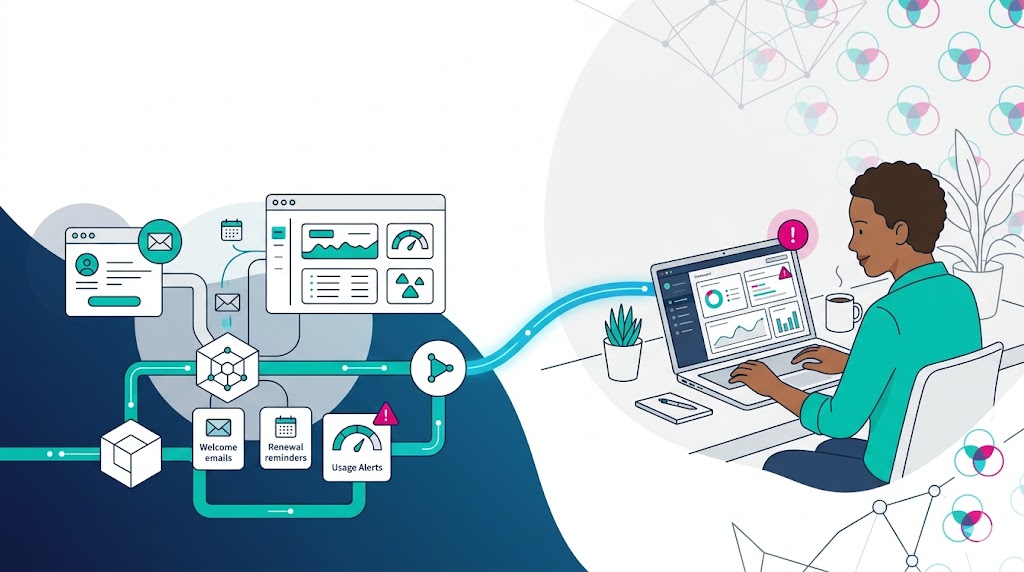
How to Use a VA for Research: Save 10 Hours a Week
It starts small. A prospect mentions a competitor you’ve never heard of, so you open a tab. That tab leads to a Companies House filing, which leads to a LinkedIn profile, which leads to a podcast episode you’ll never actually listen to. Forty minutes later you have eleven tabs, no notes, and a Slack message asking whether you’ve had a chance to look at the thing you were looking at before the thing you’re looking at now.
Then the meeting invite lands. No agenda. Twelve minutes’ notice.
This is the texture of a modern working week for most owner-operators, partners, and department heads, and it is worth being blunt about what it costs. Microsoft’s telemetry across its 365 user base found that employees are interrupted roughly every two minutes during core hours — around 275 times a day by meetings, emails, or chats. Sixty percent of meetings are ad hoc, with no invite and no prep. Nearly half of employees, and more than half of leaders, describe their work as chaotic and fragmented.
The uncomfortable part isn’t the interruption count. It’s what the interruptions are interrupting. Because underneath the calendar chaos sits a quieter, larger drain that almost nobody budgets for: the research tax.
And once you see the size of it, the gap between businesses that have solved this and businesses that haven’t stops looking like a productivity difference. It starts looking like a structural one.
The 10 Hours Nobody Costed
Here is the number that should stop you.
McKinsey Global Institute’s widely cited work on information workers found that employees spend an average of 1.8 hours every day — 9.3 hours a week — searching for and gathering information. Not analysing it. Not deciding on it. Finding it. IDC’s parallel research put the figure closer to 2.5 hours a day, roughly 30% of the workday. Interact’s survey landed at 19.8% of all business time.
Three different methodologies. Three different decades of measurement. All of them converge on the same brutal shape: somewhere between a fifth and a third of paid knowledge work is spent locating things.
The framing McKinsey’s analysts used is the one that tends to land with finance directors: it is the equivalent of hiring five people and having four turn up.
You are not paying for research. You are paying for the search that precedes the research — and then paying again for the context-switching that the search destroys.
The second cost is the one people underestimate. Gloria Mark’s long-running attention research at UC Irvine established that it takes an average of 23 minutes to fully return to a task after an interruption. Stack that against a two-minute average interval between pings and the arithmetic becomes almost comic. In a normally fragmented day, there is no realistic window in which deep, sustained work can occur at all.
So when we talk about “saving 10 hours a week” by handing research to a virtual assistant, we are not talking about an aspirational marketing figure. We are talking about recovering the median of a well-documented, thirty-year-old, cross-industry measurement — one that most businesses have simply absorbed into the cost of doing business without ever putting it on a line item.
What “Research” Actually Means Once You Delegate It
The word does a lot of unhelpful work here. When people hear “research VA”, they picture someone Googling. That’s not the job.
The job is producing decision-ready inputs. The distinction matters enormously, because it determines whether delegation gives you leverage or gives you a second inbox.
A useful filter, articulated well by practitioners across the outsourcing sector: delegate the digging, keep the deciding. A good research VA brings you 80% of the context so you spend your time only on the final 20% — the judgement call that actually requires you.
In practice, across the businesses that get real returns from this, the work clusters into six repeatable categories.
1. Prospect and account intelligence
Before a sales call: who the company is, what they filed last year, who moved into the buying role in the last six months, what they announced on LinkedIn, which of your existing clients look structurally similar. Delivered as a one-page brief, not a link dump. This alone routinely eats 30–45 minutes per meaningful call when the founder does it themselves.
2. Competitor and pricing tracking
A standing weekly sweep: pricing page changes, new hires by function, review-site sentiment shifts, ad copy changes, feature announcements. The value here isn’t any single data point. It’s the trend line you only see if somebody is looking every week — which you will never do consistently, because you have a business to run.
3. Supplier, vendor, and partner vetting
Three shortlisted options, each with pricing, contract terms, reference checks, review analysis, and a clear recommendation with reasoning. This is the single highest-ROI research delegation for most SMEs, because the alternative is a decision made on one quote and a gut feeling.
4. Content and thought-leadership sourcing
Not writing the piece. Sourcing the substance: the statistics, the studies, the counter-arguments, the three case examples worth citing, all verified and linked. Your voice, their legwork.
5. Meeting and board preparation
The brief that arrives the night before: attendee backgrounds, prior correspondence summarised, open action items, the two questions likely to be asked and the data you’d need to answer them. Microsoft’s data found PowerPoint edits spike 122% in the final ten minutes before a meeting. That spike is what preparation looks like when nobody owns it.
6. CRM and database enrichment
The unglamorous one. Verifying contacts, filling gaps, deduplicating, appending firmographics. Nobody enjoys it, everybody needs it, and it degrades continuously if left alone.
Notice what all six have in common. Every one is recurring, rules-based, and research-heavy — and none of them requires your specific authority. That’s the delegation test, and it’s remarkably reliable.
The Human in the Loop: Why Pure Automation Keeps Failing at This
Now for the objection, which is fair and which you have probably already thought: why hire a person when an AI research tool costs £20 a month?
The honest answer is that AI is genuinely excellent at the first draft of research and genuinely dangerous as the final one — and the evidence on this has moved from anecdote to hard data with unusual speed.
Start with the finding that reframed the conversation. In September 2025, BetterUp Labs and the Stanford Social Media Lab published research in Harvard Business Review introducing the term “workslop” — AI-generated content that masquerades as good work but lacks the substance to advance the task. Surveying 1,150 full-time US desk workers, they found 41% had received workslop in the preceding month. Each incident consumed just under two hours of someone else’s time to resolve. Extrapolated, that’s roughly $186 per employee per month, or over $9 million a year for a 10,000-person organisation.
Read that again, because the mechanism is the point. The work wasn’t slower to produce. It was faster to produce and slower to use. The cost didn’t disappear — it moved downstream, onto the person who had to verify it.
The reputational damage was worse than the time cost. Around half of recipients rated the sender as less creative, less capable, and less reliable. A third didn’t want to work with them again.
Forty-one percent of desk workers received AI-generated “workslop” in a single month, at nearly two hours of clean-up per incident. The productivity didn’t vanish. It was transferred to somebody else’s diary.
And in research specifically — the domain where the stakes are citation accuracy — the failure mode is now documented at industrial scale. A Lancet study led by researchers at Columbia audited nearly 2.5 million biomedical papers and 97 million citations on PubMed Central and found more than 4,000 fabricated references across almost 3,000 papers, with the trend going near-vertical from 2024 onwards. GPTZero’s analysis of NeurIPS 2025 accepted papers turned up at least 100 confirmed hallucinated citations across 53 papers — at the premier AI conference, after peer review by three to five experts each.
The professional-services sector has learned the same lesson expensively and publicly. Deloitte Australia, Deloitte’s Newfoundland and Labrador report, and EY Canada’s withdrawn loyalty study all involved AI-assisted work with citation problems serious enough to require retraction or refund.
The practitioner reaction is worth reading, because it is not the reaction of Luddites. On the Hacker News thread about the EY Canada report, the most upvoted line of argument wasn’t that AI shouldn’t be used. It was that the verification capacity to use it safely doesn’t exist inside most organisations — the people qualified to check the output are already the most overloaded people in the building. One commenter noted the absurdity of large tech firms responding to the problem by assigning senior engineers to vet generative AI output — people whose time is the scarcest resource in the company.
On a separate thread about hallucinated citations polluting the scientific literature, a researcher put the discipline plainly: never include a reference you haven’t read and verified yourself.
That is the whole argument for the human in the loop, and it applies exactly as much to a competitor pricing sweep as to a medical paper.
What the human actually adds
Three things a model cannot supply on its own:
Accountability. A VA who signs off on a brief has a professional stake in it being right. A model has no stake in anything. When your VA writes “confirmed via Companies House filing, 14 March”, someone has actually opened that filing.
Judgement about relevance. Your VA knows you’re pitching a family-owned manufacturer in Yorkshire, not a Silicon Valley scale-up, and filters accordingly. This is context accumulated over months of working with you, and it is the single largest reason a dedicated VA outperforms both a model and a rotating freelancer pool.
Voice and register. This matters more than people expect in client-facing communication. British business English has conventions — around directness, hedging, humour, and formality — that generic AI output flattens into a kind of transatlantic corporate mush. Recipients notice. They just don’t tell you they noticed.
The correct architecture is not human or AI. It’s AI as the first-pass drafting and search accelerator, with a skilled human owning the sourcing standard, the verification, and the final judgement. VAConnect’s own model reflects this — its VAs are trained on the tools UK businesses actually run on, from Xero and HubSpot to Monday.com and Microsoft 365, with the assistant as the accountable layer on top rather than a replacement for the tooling.
The businesses winning here aren’t the ones who bought the most AI. They’re the ones who kept a competent human on the hook for whether the output is true.
The South African Advantage: Why the Map Matters More Than the Rate Card
Now the part that surprises people who haven’t looked at the offshore market since 2019.
South Africa has quietly become the highest-quality-per-pound delivery location for English-language support work serving the UK and Europe, and the industry data supporting that claim is not subtle.
The timezone is the whole ballgame
South Africa sits at GMT+2. That puts it one hour ahead of the UK during British Summer Time and two hours ahead in winter. In practical terms, your VA’s working day and your working day are effectively the same working day.
This sounds like a small thing. It is not a small thing. Microsoft’s data found that meetings after 8pm are up 16% year over year, driven by cross-time-zone collaboration, with 30% of meetings now spanning multiple zones. Every hour of non-overlap converts synchronous work into asynchronous work, and asynchronous research is a disaster. Research is iterative. You ask a question, the answer reframes the question, you ask again. With a 7-hour gap, that loop takes three days. With a 1-hour gap, it takes forty minutes.
VAConnect makes this explicit in its UK positioning: same working day, real-time collaboration on Teams, Slack, and Zoom, and no overnight gaps. From Johannesburg to London, the friction is close to zero.
The English is native, and independently measured
South Africa ranked 13th globally in the 2025 EF English Proficiency Index with a score of 602, placing it in the “Very High” band and first in Africa — ahead of Japan, the UAE, South Korea, and around a hundred other countries. The Philippines, for comparison, ranks 22nd. The EF index draws on 2.2 million adult test-takers across 113 countries, which makes it one of the few third-party benchmarks a UK buyer can actually rely on.
But proficiency scores understate the real advantage, which is register. South African business English is not learned English. It’s inherited English, with a shared legal vocabulary, shared corporate conventions, and a shared sense of humour. BPESA — the national industry body — identifies deep-rooted cultural affinity with the UK, US, and Australia as a core pillar of the sector’s proposition, alongside neutral accents and high measured empathy.
The sector has tripled, and the UK is the reason
This is where the numbers get genuinely striking. According to BPESA’s refreshed national value proposition, published March 2025:
- Global Business Services headcount grew from 65,000 in 2019 to roughly 150,000 in 2024
- Export revenue grew from US$1.04 billion to an estimated US$2.91 billion over the same period
- The UK is the largest source market, at around 55% of headcount servicing British clients
- The national target is 500,000 cumulative jobs by 2030, backed by the Department of Trade, Industry and Competition
A sector does not triple in five years on price alone. It triples because buyers keep renewing.
Independent buyer surveys back this. Ryan Strategic Advisory’s global CX delivery survey ranked South Africa first among US and Australian buyers in 2025 and joint third overall behind India and the Philippines — remarkable for a market a fraction of their size.
Cost, without the quality trade-off
BPESA’s March 2025 figures put fully loaded costs at 55–65% below equivalent UK, US, and Australian roles, with a further 7–10% available through government incentive programmes on qualifying engagements. In UK terms: the £35,000–£50,000 you’d spend on a London PA plus employer NI, pension auto-enrolment, and desk space converts into a dramatically different cost base for a professional of comparable calibre.
Current VAConnect packages are listed on the pricing page.
Retention, which nobody asks about and everybody should
Here’s the metric that separates serious providers from arbitrage plays. South African GBS annual attrition runs 10–18%, against 30–40% in the Philippines. For research work specifically, that difference is enormous — because a research VA’s value compounds. In month one they produce competent briefs. By month six they know which sources you distrust, which competitors you actually care about, and what “good” looks like in your business. Every replacement resets that to zero.
VAConnect reports 98% client retention over 14 months, verified from VAConnect’s invoice records, and offers no-cost replacement if a placement underperforms — meaning the onboarding investment is protected rather than gambled.
And the compliance question, answered
South Africa’s Protection of Personal Information Act (POPIA) was drafted with close alignment to GDPR. For a UK business handing over data for CRM enrichment or prospect research, that alignment materially reduces the compliance engineering burden compared with most alternative offshore destinations. It’s not a headline feature. It’s the thing your data protection officer will ask about in week two.
The UK now generates the majority of South Africa’s international GBS headcount. Fifty-five percent of a sector that tripled in five years. British businesses have already voted — most just haven’t noticed what they voted for.
The Evidence Base: Remote Delegation Isn’t a Belief System Anymore
There’s a residual assumption worth dismantling, because it still quietly blocks decisions in a lot of boardrooms: that remote work is a productivity compromise you accept for cost reasons.
That assumption is now empirically indefensible.
The strongest evidence comes from Bloom, Han, and Liang’s randomised controlled trial published in Nature in June 2024 — the largest RCT of hybrid arrangements among university-educated professionals, covering 1,612 employees at Trip.com. The results: hybrid work had zero effect on productivity or career advancement, while resignations fell by 33%. There was no significant difference in output measures, including lines of code written by software engineers.
The detail that ought to be printed on a poster in every executive team room: managers predicted the arrangement would reduce output by 2.6%. By the end of the experiment, those same managers estimated it had improved performance by around 1%. Direct experience changed their minds. Nothing else did.
Subsequent work from the Becker Friedman Institute at Chicago has pushed further, finding that remote arrangements can improve quality metrics as well as output — with audited service ratings and customer scores rising post-shift, partly because remote environments are quieter and allow more accurate work.
As Bloom summarised the implications: the study explains why around 80% of US companies now offer some form of remote work, and why the remaining fifth are likely paying a price for not doing so.
Apply that to research delegation and the conclusion is straightforward. There is no productivity penalty inherent in the arrangement. The variables that determine whether it works are the ones you control: how well the person is matched, how clearly the work is briefed, and whether anyone is managing the relationship. Which brings us to the part most businesses get wrong.
The Brief Is the Bottleneck (Not the Assistant)
Almost every failed VA engagement fails for the same reason, and it isn’t the VA.
The pattern is well documented across the sector: delegation collapses when there’s no written process and no single person who owns the work. Hand a task to a rotating pool with vague instructions and it comes back wrong. That’s a setup failure, not a talent failure. Entrepreneurs commonly report losing 20+ hours a week to precisely these failures — unclear instructions, undocumented processes, vague expectations, and the micromanagement that follows.
If you want the 10 hours, build the system. It takes about a fortnight.
Week one: write three SOPs, not thirty
Pick your three highest-frequency research tasks. For each, write a one-page standard operating procedure covering: the trigger, the sources to use, the sources to avoid, the output format, and the definition of done. Don’t try to document everything. Document the things that happen weekly.
Adopt a standing research brief format
Every request should carry five fields. Anything less and you will be answering clarifying questions all afternoon.
- The decision this informs. Not “research competitor X” but “decide whether to reprice our mid-tier before Q4.”
- The specific questions. Three to five, phrased as questions.
- Source constraints. Primary sources only. Companies House, filed accounts, official pricing pages. No content-farm aggregators.
- Output format and length. One page, bullets, recommendation at the top.
- Deadline and confidence bar. “Best available by Thursday” is a different job from “verified and defensible.”
Set a verification standard and enforce it
This is the non-negotiable one, and it’s what makes the human-in-the-loop argument real rather than rhetorical. Every factual claim carries a source link. Anything the VA could not verify gets flagged as unverified rather than quietly smoothed over. Any AI-assisted first pass gets checked against the primary source before it reaches you.
Agree this in week one and you will never have a workslop problem. Skip it and you have simply moved the two-hour clean-up cost from your AI tool to your assistant.
Run a weekly 20-minute review
Not a status update. A calibration session: what was useful, what was noise, what to stop doing. Delegation is meant to compound month over month — the scope should be visibly larger in month six than in month one. If it isn’t, the review is the thing that’s missing.
Choose managed over marketplace, deliberately
This is where the model you buy matters most. A managed agency handles recruitment, vetting, training, performance management, and backup cover, which means the accountability for output quality sits with the provider rather than with you. VAConnect runs this through four proprietary platforms — a dedicated South African talent portal for sourcing and pre-screening, VAVarsity for continuous upskilling, and the VAPI performance and happiness programmes that track the working relationship in both directions on a monthly basis.
That last one is unusual and worth pausing on. Most agencies measure client satisfaction. Measuring the assistant’s satisfaction as well is how you get 98% client retention over 14 months, verified from VAConnect’s invoice records — and retention, as established above, is where research delegation actually generates its returns.
What 10 Hours Actually Looks Like on a P&L
Let’s do the arithmetic honestly, because “save 10 hours a week” is easy to say and rarely modelled.
Take a UK business owner or senior partner whose time carries a defensible internal value of £100 an hour — conservative for anyone billing clients or closing deals.
Ten hours a week reclaimed = roughly 460 hours a year = £46,000 of recovered capacity.
Against that, a dedicated VAConnect placement at South African rates, fully managed, with no employer NI, no pension auto-enrolment, no recruitment fee, no desk, and no HR overhead.
The gap is not marginal. And it understates the position, because it prices only the hours, not the compounding effects: the deals that closed because someone actually prepared the brief, the supplier you didn’t overpay because three quotes were properly compared, the competitor move you caught in week two rather than month five, the strategic thinking that finally had somewhere to happen.
There’s also a cost most models omit entirely — the cost of the research that simply doesn’t get done. Every business owner has a list of things they’d investigate if there were time. That list is where competitive advantage lives, and for most businesses it has been sitting untouched for years.
A business running properly briefed research support isn’t 10% ahead of one that isn’t. It’s operating with an entire additional working day per week, every week, permanently — and compounding the difference.
The Gap Is Wider Than It Looks
Here’s what’s genuinely startling about the current moment, and it’s worth stating plainly.
Every input needed to close this gap is now cheap, proven, and available. The productivity evidence for remote arrangements is settled at the level of randomised controlled trials published in Nature. The talent market is mature, independently benchmarked, and sits in your timezone. The cost differential is 55–65%. The compliance framework is GDPR-aligned. The management infrastructure exists off the shelf.
And yet the majority of UK businesses are still absorbing 9.3 hours a week of information-gathering per knowledge worker as an unavoidable cost of trading. Still being interrupted every two minutes. Still editing the deck ten minutes before the meeting. Still deciding on one quote and a gut feeling.
Meanwhile a second group has quietly restructured. They brief. They delegate the digging and keep the deciding. They have someone accountable for whether the numbers in the report are real. They walk into meetings already knowing who’s in the room.
The first group experiences this as the second group being lucky, or better funded, or somehow having more hours. They don’t. They have the same hours, allocated differently, with a competent human in the loop where it matters.
That gap widens every quarter — because delegated research compounds and unmanaged chaos compounds too, just in the opposite direction. The question isn’t whether the model works. That’s been answered. The question is how many quarters you’re prepared to concede before you use it.
Comparative Table: Three Ways to Handle Research
| DIY Coordination | Generic Freelancers | VAConnect | |
|---|---|---|---|
| Hours reclaimed per week | 0 — you are the bottleneck | 2–4, offset by management overhead | 8–12, growing as scope expands |
| Timezone overlap with UK | N/A | Highly variable; often 0–3 hrs | 6–8 hrs (GMT+2, same working day) |
| English register | Native | Variable; frequent tonal mismatch | Native-level; EF EPI rank 13 globally, #1 in Africa |
| Vetting | None — you do the hiring | Self-reported profiles, platform ratings | Proprietary talent portal; skills testing, background and cultural-fit screening |
| Ongoing training | None | None | VAVarsity continuous upskilling, included |
| Continuity / attrition | You never leave, but you never scale | High churn; context resets each time | SA sector attrition 10–18%; 98% client retention over 14 months, verified from VAConnect’s invoice records |
| Context accumulation | Total, but trapped in your head | Minimal — restarts with each engagement | Compounds monthly with a dedicated assistant |
| Verification accountability | Yours entirely | Ambiguous; often none | Explicit standard, managed and reviewed |
| Management burden | Total | Substantial — you are the agency | Handled: recruitment, performance, backup cover |
| If it isn’t working | Nothing changes | Start the search again, from scratch | No-cost replacement with managed transition |
| Employment admin | Full PAYE, NI, pension if hiring | Contractor classification risk | Handled in South Africa; no PAYE, NI, or auto-enrolment |
| Typical annual cost vs. London PA | £35k–£50k + on-costs | Low headline rate, high hidden cost | — |
| Compliance posture | Domestic | Undefined | POPIA, closely aligned with GDPR |
Sources
- Bloom, N., Han, R., & Liang, J. (2024). Hybrid working from home improves retention without damaging performance. Nature, 630, 920–925. Link
- Niederhoffer, K., Kellerman, G. R., Lee, A., Liebscher, A., Rapuano, K., & Hancock, J. T. (2025). AI-Generated “Workslop” Is Destroying Productivity. Harvard Business Review, September 2025. Link
- Microsoft WorkLab (2025). Breaking Down the Infinite Workday. Work Trend Index Special Report, based on Microsoft 365 telemetry and a 31,000-respondent survey across 31 markets. Link
- BPESA (March 2025). Refreshed National Value Proposition for South Africa’s Global Business Services Sector. Link
- EF English Proficiency Index 2025; Ryan Strategic Advisory Offshore CX Delivery Survey 2025; aggregated South Africa GBS market data. Link
- McKinsey Global Institute, IDC, and Interact information-retrieval studies, as compiled by Cottrill Research. Link
- Hacker News practitioner discussion threads on AI citation verification burden: EY Canada report; hallucinated citations in the literature
- Topaz et al. (2026), The Lancet — audit of 2.5m biomedical papers and 97m citations, as reported by Fortune. Link
- VAConnect service, pricing, retention, and UK market data: vaconnect.co.za · vaconnect.co.uk · UK placement page
Editor’s note: client testimonials referenced in VAConnect’s published Clutch reviews have been summarised rather than quoted at length. For named, attributable client quotes, request current verified reviews from the VAConnect team before publication.